I honestly thought I’d be able to manage two blogs: WordPress, which I’ve had for years, and my newer space on Substack. I wanted my writing to remain accessible for those who prefer WordPress. Not that I’ve been a particularly regular post-er here, but I know some of you have been following me for quite some time.
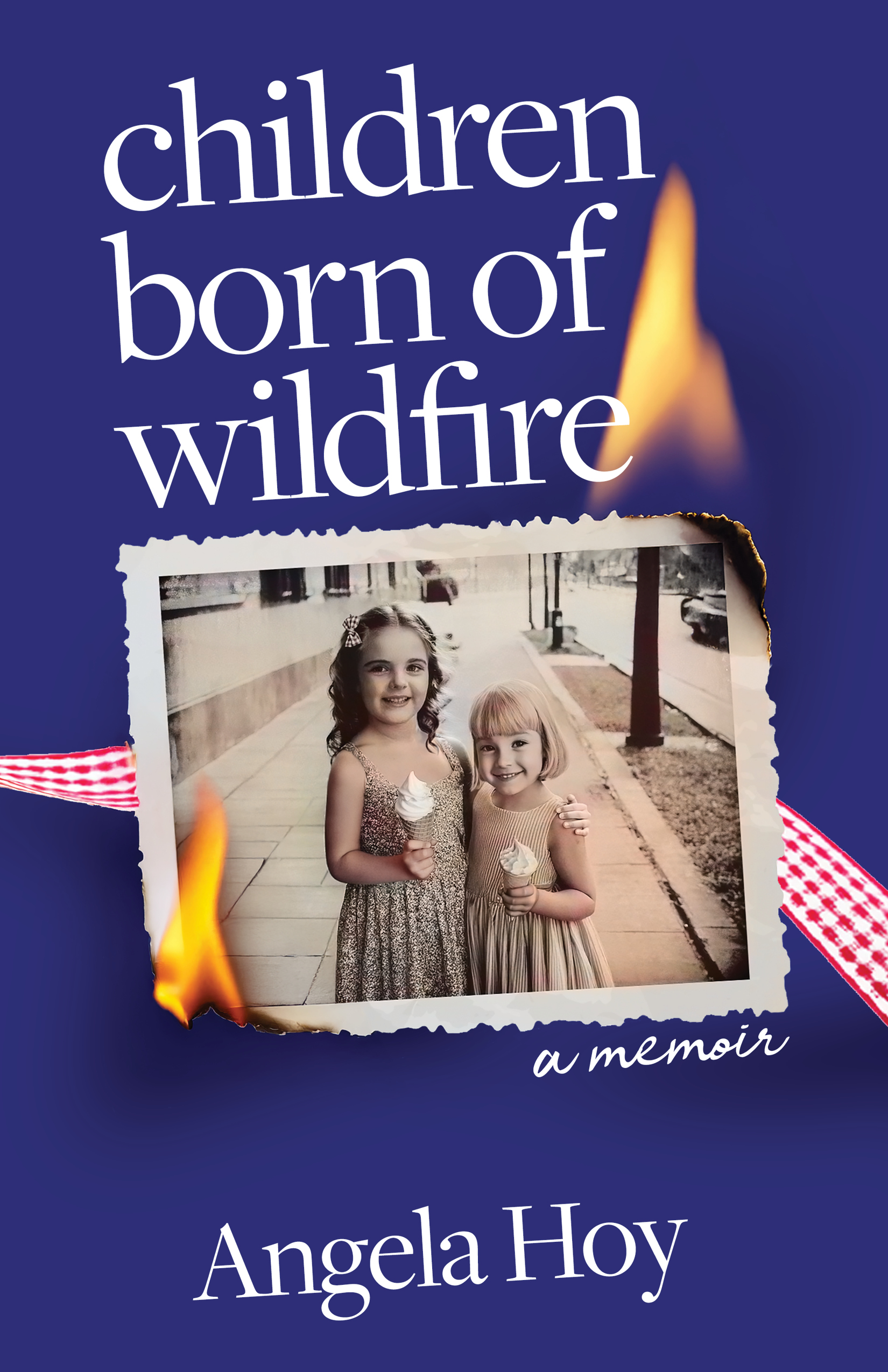
One big thing that happened is that I wrote a book! It swallowed up the last year and a half, but I’m super proud of it. Here’s the Amazon link. It’s also available on Amazon in several other countries, Barnes & Noble, Bookshop and many more online sellers.
With all the activity, I’ve realized that I can’t manage both blogs. So I made the difficult choice to let WordPress go completely fallow, except for when I mine old blogs to repost. My posts on Substack will always be free–I don’t plan on adding a subscription cost because I’m not writing for a living. I write to let the words out.
If you choose to follow me there, my blog is called It’s About Time and here’s the link. It’s free to set up an account and many interesting writers and photographers hang out there.
I’ve also created a website where I occasionally post poetry, and my blogs flows into that platform automatically.
You lived to a magnificent age. But somehow all those years don’t feel like enough.
After living a life virtually free of hospital visits, you become a regular once you hit 90. Pneumonia. Then lung cancer, stage 1. COVID. More pneumonia, caused by aspiration because you had trouble swallowing food. You rallied from all of it. Until you couldn’t.
We get to the hospital on a Friday afternoon after traveling north for several hours. The doctor is certain you’re in the early stages of passing and tells us your illness is “unsurvivable” at your age and frailty. Propped up in the hospital bed, your thick cough rattles your body. You hadn’t been awake much and now, when you are, the unexpected hallucinations are bizarre. Dogs under your bed. Explosions and gunfire in the hospital hallway. We do our best to adapt while reassuring you the hospital is safe.
We sit in a circle around you, taking turns holding your hand and leaning in close with words of love, trying not to drip tears on you. Your wife, your two daughters and their husbands, and your son-in-law’s sister and husband. Your precious family. Our beloved patriarch. You are restless, anxious. We don’t want you to be in pain. You are in and out of full awareness. We tell you, “It’s okay Dad, you can let go.” Your agitation increases. My sister, your youngest, asks the doctor to give you medications for pain and anxiety. Eventually you calm.
My sister and I promise to take care of your sweet wife—who doesn’t want us to refer to her as our stepmom, even after 39 years. We tell you that we’ll take care of each other. We assure you we’ll be okay. You rouse a bit and when I am holding your hand, almost inaudibly you say, “love you” followed by my name and then “love you” then my sister’s name, and one more “love you” and your wife’s name. So much feeling packed in those gentle sounds. Your three girls. Your eyes firmly close, followed by quiet breathing. I kiss your forehead.
I notice that, as always, the bed is too short, and your legs bend slightly sideways to accommodate your tall frame. That’s how you’ve been in life—accepting of circumstances, figuring out how to make it work, adjusting the frame of your life to be with your daughters when we finally found you again in 1986. A few years ago, you urged me to take my stories and make them into a book about our childhood, how as little girls we were abducted away from you, all the suffering that followed, and then the miracle of reuniting when we girls were grown. You and your kind wife continue telling me it’s an important story.
I think about that conversation as I watch your gaunt face on the pillow, your hearing sporadic even with hearing aids, your eyes unseeing after the rest of your vision disappeared a few months ago. Your quiet dignity is intact even as age, illness and hospital time force you into dependency. Then you open your eyes, sit up slightly and with a small but firm wave of your hand say very clearly, “I love you guys, but I’ve got to go!” Then you close your eyes and lay back. Around your bed, we all weep anew.
Your bed is in a ward of four, separated by curtains, because the hospital is stuffed full of patients. The doctor is trying to find a private bed. The entire wing is like a jenga puzzle of patients, staff and equipment. The nurses are all incredibly tender toward you and solicitous toward our family. Though they are pressed to their limits by the patient census, they take time to check on you, bring water or juice for our tearful group “as a service to the family,” and gently answer our questions. The elderly lady across from you, suffering from confusion caused by an infection, keeps getting out of bed to talk to you. At one point she calls out, “He’s gonna be fine!” The nurses work hard to stop her from barging into our family gathering.
My husband steps out to say some special prayers. We are all exhausted. The impact of seeing you so vulnerable and near death amid the collective mood of sorrow renders me mostly mute. Your bright blue eyes are now full of mist and I grieve this loss as well. I hold your hand and tender prayers swirl out of my heart. You settle into sleep and our group talks about keeping watch. My sister stays with you that night, Dec. 6, 2024, and at midnight she sings happy birthday to you, sweetly, softly, so you’d know you weren’t alone on your special day, your 96th year on this Earth. You always said your birthday was easy to remember because it falls on Pearl Harbor Day. Disaster and celebration entwined around your life.
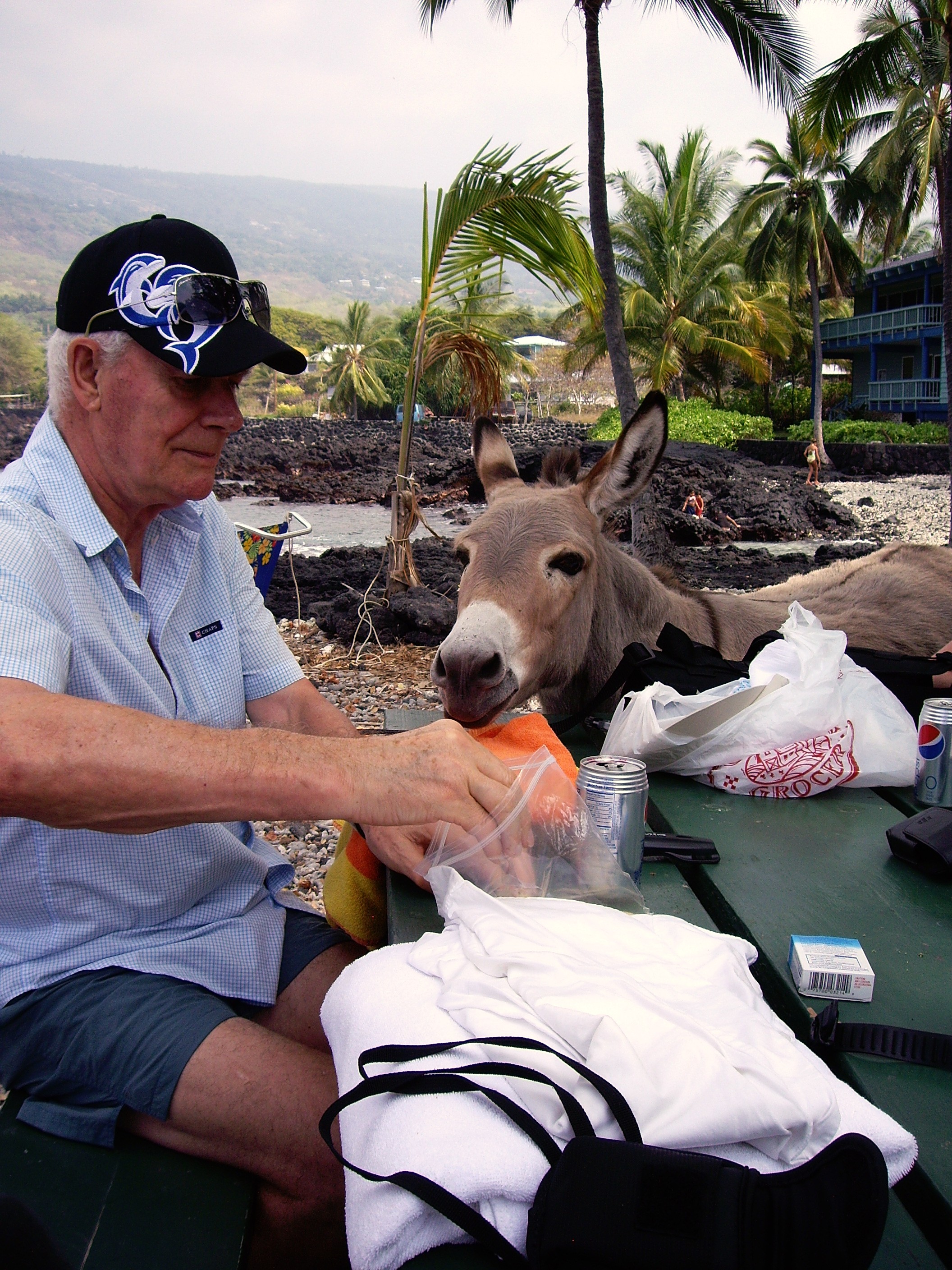
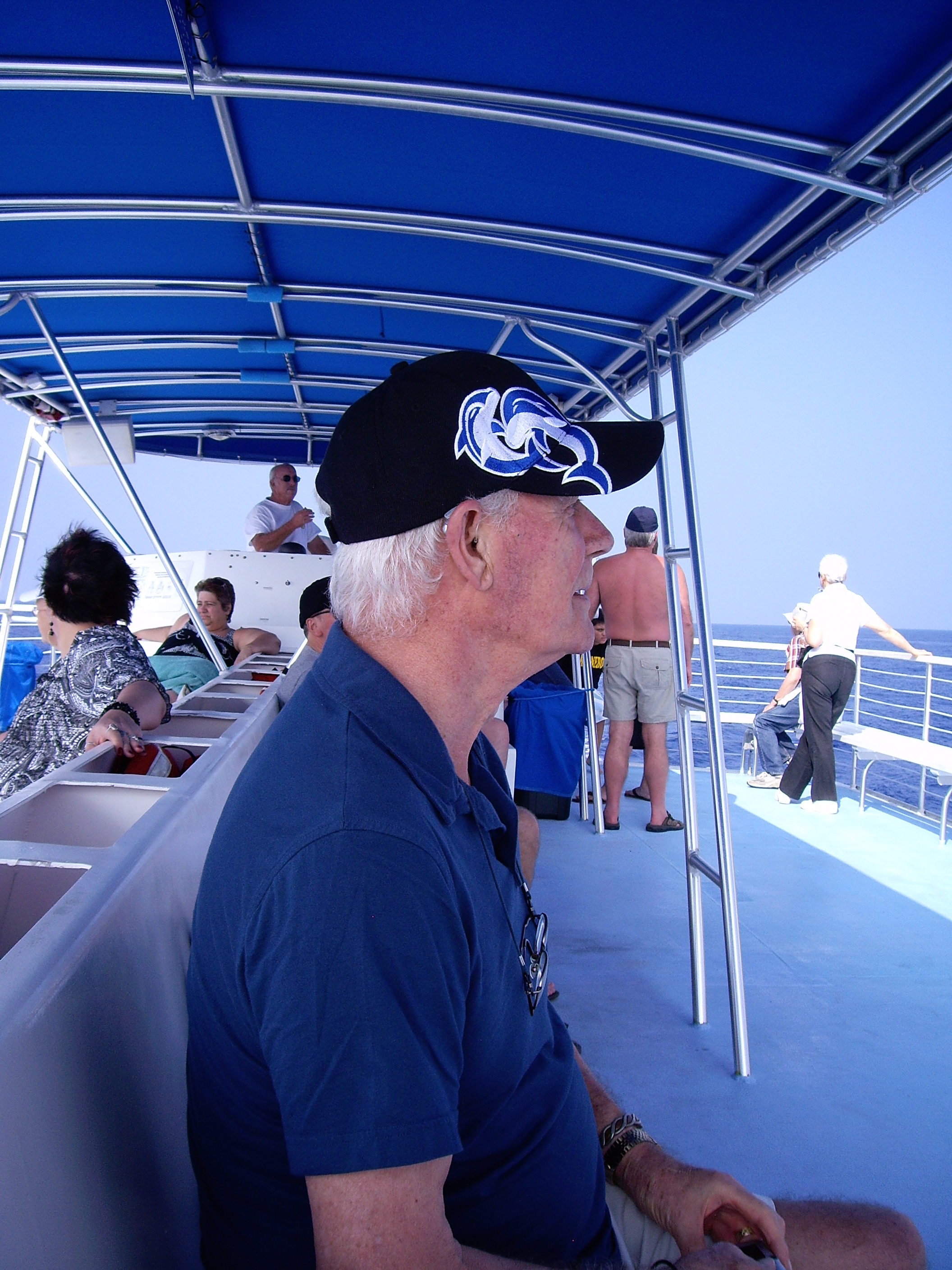
The next morning you’re awake. You have a little bit to eat and drink. You tell jokes, you sing a song from the 1950s, you tell the nurse you’ve been married for 41 years and you have two grown daughters. We are all amazed. I ask if you remember the wondrous family trip to Hawaii in 2010 and your face lights up. How about the pet donkey that roamed the beach raiding people’s pockets, making you laugh? And the humpback whales that swam into the inlet, releasing their magical breath just offshore? You nod yes, yes through the clouds in your eyes. The dogs under your bed distract you but we again adapt to your reality.
201020102015
The doctor is at last able to move you to a semi-private room. Finally, you sleep as we silently watch. That night, your wife stays with you. Sunday morning you are not doing well. So much coughing and mucus. My sister sends your wife home to rest and to get away from the suffering. You keep saying you are tired, and we tell you we understand and it’s okay for you to go. You try to get out of bed saying, “I want to leave this place.” We think you want to go home and we say, “You can’t go home yet, Dad, you are not strong enough.” Then you again become calm and talk with us a bit. The day goes by. Somehow, there is a pervading peace around us. You cheerfully tell us that one of the nurses is going to adopt the dogs under the bed.
The unlikely dysfunction of your brain reminds me of my own struggle once we found you. After spending years trying to fit into a fractured, toxic family system, I didn’t know what love looked like, felt like or sounded like. You were entirely different from them—not at all difficult to be around. Your unruffled and quiet nature awaited each of my visits, always the same, always ready to listen, always happy to see me. Eventually I gave up on the toxic relatives and decided to grow under your branches. I didn’t recognize the immense gift of healing that unfurled in my life during those years. You were planting, watering, and nurturing my soul as I talked to you, wrote you letters about the wreckage in my past that probably bruised your heart, and gradually became your daughter.
For decades you called me every weekend that you were in town and we would chat about my work and your travels and sports and politics and anything else on our minds. You had opinions. I had opinions. We joked back and forth. At the end of those calls, you’d say, “Remember that we love you.” As you aged, you’d sometimes add, “So very, very much!” When you could no longer dial the phone, we began calling you every week we were in town. Now in the crowded hospital, sitting next to your resting form, I finally understand that you taught me to go toward the love. You were my life’s revolution.
On Monday you rally again. It is wrenching to watch you fade, struggle back, fade and struggle again. Your wife goes home, broken by it. My sister and I and our husbands decide to go, concluding that you are going to rally and retreat for days as you have many times in this hospital. Our sister-in-law elects to stay and sit with you and we thank her, wrung out from our four-day vigil. I think about her bond with you. After you were marooned at home with your damaged body and limited sight, she visited on most weeks to read to you. You and she chose the books together, always by your favorite author, Wilbur Smith. You would listen intently for several hours amid cups of coffee and friendly chatter. She brought you time and kindhearted care with her beautiful reading voice.
Your rattling cough brings me back to the present and cracks my heart a little more. We say tender goodbyes to you, explaining that we’ll be back in a few days. I kiss you on the forehead and you smile, your unseeing eyes slightly open. In the corridor, nurses and aides are packed along the walls with tiny mobile computer desks that are tucked in between laundry trolleys. Patient call lights are flashing. Every room is full. I see one of the nurses who’s been caring for you and I thank him. He responds, holding his hand to his chest, “It has been my complete privilege.” My eyes water. As we near the exit, we pass two women pressed against a gurney in the hallway. A youngish-looking man lays there, eyes tightly shut, as the women sing a lovely melody to him. Their bodies are full of urgency; their voices are full of gentleness. I wonder how they can sing through their grief. It is sacred.
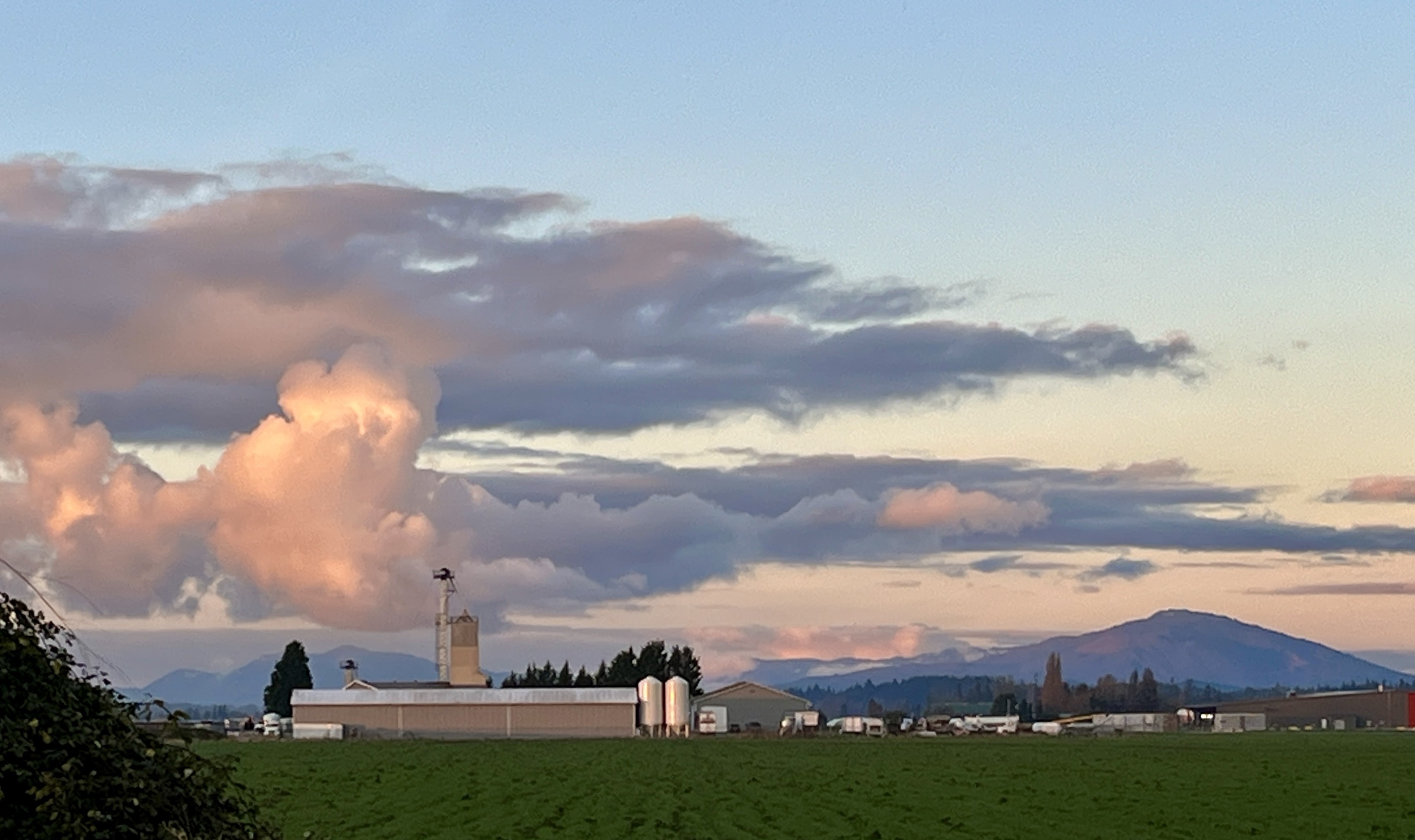
That afternoon my husband and I travel south across the Skagit Valley in Washington state and stop the car for a break. I take photos of a gorgeous sunset. As we are leaving, my sister calls from her home and we stop the car. “I have some terrible news. There’s no good way to say this. Dad is gone.” My sister’s voice is pitched with grief and she says, “I am wrecked.” We are all in shock. We felt sure you’d be in hospital for a couple more weeks.
We speak to our sister-in-law a few days later. She tells us that she sat quietly with you that last morning. Your wife came back at noontime but couldn’t bear your desperate coughing, so with some encouragement, went home to rest. Around 3 p.m. you were agitated, plucking at your bedcover and your gown. You opened your eyes, turned toward our sister-in-law and said, “You have to help me get out of here!” She finally understood and, taking your hands, she leaned in to softly reply, “You’re too sick for me to take you away. There’s only one way you can leave and you know what that is. Everyone understands that you have to go, and they’re ready. You have said all your goodbyes, and all you have to do is relax and let go. We’ll all miss you dreadfully but, while you were here, you were ours and no one can take that away from us.”
Gradually you calmed as she held your hands and repeated her message of love. She says you were so tranquil, barely breathing. Another half hour drifted past. A nurse who was hurrying down the hall saw your face and came into the room. Following a quick check with the stethoscope the doctor was called. She looked at you, saying, “I think he is at peace now,” and did a final listen to your heart, now silent. You flew into the stars without fanfare, without drama, without bitterness.
Later, my sister realized that you couldn’t leave while your three girls were present, and I believe her. Your devotion was deeply rooted, an anchor for your world with us. Then when your body crumpled for the last time, you were in the presence of a beloved friend who helped you depart. I realized that I was taking photos of the sunset as you departed.
Your last words to your three girls were full of whimsy and love. You died peacefully, leaving behind a beautiful story in which to wrap our broken hearts.
Goodbye Dad—remember that we love you. I promise I’ll get the book published. You’ll be proud.
Photo by Fatih Marau015flu0131ou011flu on Pexels.com
One day I was meandering along the bakery aisles at my local discount grocery store. As I reached the bulk bins of bagels and stopped to consider the choices, a woman behind the counter in an official store apron saw me and shook her head in a sad sort of way. My eyebrows collected into a question mark as I gazed at her. She seized her opportunity, “It’s a real shame that we have to keep most of the bagels behind the counter right now.” My question mark got bigger. “Yep,” she said, “it was just too bad when those boys spit in the bins the other day.”
Thus, I faced several crises. I could not figure out how the bakery had decided which bagels to remove to safer ground and which to leave in spitting range. And what exactly did “right now” mean? Was there a time limit on bagel protection? On the social justice side of shopping, I wondered whether I should rush behind the counter in a show of solidarity against bagel spitting. In the end, I opted for a non-activist yet slightly supportive stance. “Wow, that’s really gross,” I said, as the question mark slid into what I hoped was a sympathetic sort of grimace while I slowly pushed my cart out of conversational range.
I no longer buy bulk food from bins with lids shoppers (or spitting boys) can open. Especially bagels.
If your property backs onto an unmanaged forest, you can expect the unexpected.
Bugs will fly up your nose without warning.
Birds will plop their poop on your patio furniture. Frequently.
Cottontails will nip off every single viola bloom in your flower containers. And leave the stems.
Deer, especially pregnant does, will mow off the top two inches of all your flower containers, eating every bloom, bud and tender new leaf. Lavender, rosemary and other herbs are the exceptions … so far.
Evergreens will drop needles, cones, branches, moss, pollen and more. Nonstop onto your patio.
Slugs move a lot faster than their name implies, and eat more than you can imagine. They manifest in large numbers some years and then will seem to be extinct during others. (This is my pretend extinction year.)
You will generate enough yard waste for a small town.
On the other hand…
You’ll see sunbeams glimmer through tall trees and hear a chorus of bird trills such that you expect to next see angels floating into sight.
Early in the morning you’ll see curious towhees, busy juncos, or newly fledged robins with their white-ringed eyes each take a dip in the bird bath outside the kitchen window.
Tiny green frogs will live in your watering cans and, when you forget to check, will leap wildly out of the water, making you laugh.
Pollinators of every kind will entertain you as they busily investigate every open blossom. Butterflies, dragonflies, hummingbirds, wasps, and many different bees will all visit, sometimes clambering over each other, sometimes squabbling, sometimes napping. So far this year, bumblebees and honeybees have been scarce even though a selection of their favorites are bobbling in the breeze.
A doe might quietly emerge from the forest in the spring with a newly unfolded and speckled fawn tottering along behind her, still working out the rhythm of its legs.
You could look out your office window one grey fall morning and see a splendid five-point stag standing in front of your six-foot arbor hedge then leap over it with room to spare.
For those few precious minutes, you’ll sip on your coffee and feel your stressed muscles soften as you give thanks for your little patch of the world.
Today I was reading the latest newsletter from Nikita Gill on shaking loose from personal cell phones. One of her (very good) points was that click bait is designed to generate anger, which in turn will keep us online to read more. That made me think of a post from the inimitable Maria Popova about Kurt Vonnegut. She reminded me what a remarkable thinker he was and how much I wish far more of our online content was filled with his words. Speaking of anger, here’s a portion of what he said to a graduate class in 1978.
“ As a member of a zippier generation, with sparkle in its eyes and a snap in its stride, let me tell you what kept us as high as kites a lot of the time: hatred. All my life I’ve had people to hate — from Hitler to Nixon, not that those two are at all comparable in their villainy. It is a tragedy, perhaps, that human beings can get so much energy and enthusiasm from hate. If you want to feel ten feet tall and as though you could run a hundred miles without stopping, hate beats pure cocaine any day. Hitler resurrected a beaten, bankrupt, half-starved nation with hatred and nothing more. Imagine that.”
Oh, and another thing Gill said, crediting her grandmother: put down your phones, go outside for a long walk and “find peace in a less noisy life and ‘taking breaks from the opinions of others.’” Breathe in the day, breathe out the anxiety.
Note to readers: This little story was published in a now-defunct literary journal a few years ago. I thought I’d give it a second life. Let me know what you think!
Jayna fingered and spun a strand of her hair as she read the newspaper. She wondered how she would look if she were lost in the woods for a week, finally emerging after a plucky struggle for survival, her hair riddled with twigs and leaves. What if she was on a plane that crashed in a jungle and she was thrown clear of the wreck, one of a handful who lived? Perhaps she would be found, her picture appearing in the paper with dank, stringy hair and a great, big smile, under the headline “Lucky few come home alive.” Or, she imagined fighting off a dark, threatening attacker, some of her hair wrenched out in the process, and later being recognized for her gutsy courage as she lay recovering in her hospital bed, a bandage around her head and her hair poking through. There were so many stories in hair.
She put down the paper and glanced in the mirror at her mop of hair. A rescue helicopter was not going to pluck her from the chemo chair next week. A search party would not retrieve her as she was immobilized for radiation. And there was every possibility she’d duplicate the anonymous death of thousands, just ahead of thousands more. She thought of being remembered well in the obituaries for her adventurous spirit and wonderful heart, followed by gentle words about memorial donations. The most delightful things were said about the dead, but she’d never seen a death notice that eulogized the hair of the deceased.
How would it read? “Her hair was deeply loyal and generous to a fault, never thinking of itself. There are many–too many to name–who will miss her friendly and gregarious locks. Whether at work, at home, or just out and about, her hair was always in the right place at the right time, looking great. The world just won’t be the same without this kindhearted hair–the family is united in grieving a great follicular loss.
“Among us, always shining and sweet,
your passage was too swift, too fleet!
Never again will we see tresses so pure
upon a head so pleasant and demure.”
Jayna pondered adding in something about a quirky sense of humor, grinned at herself in the mirror, then went to get her photo albums to ensure a good selection of photos were visibly handy around the apartment, all of which featured her with fabulous hair.
Her face, the gaze so like my father’s that I feel a pang. Her sturdy spirit pushes against her unreliable body and sputtering memory. We smile around the room, genetics pull us close as we count the years and treasure the minutes. How is Auntie Pam, we ask? How is your father, they ask? Auntie, uncle, cousins, nieces, sharing jokes and cups of tea and stories of good days and surgeries and babies and weather and all the bits and pieces of life that knit our tributaries into one river.
Genetics pull us close as we count the years and treasure the minutes.
He’s a darling little pork chop, we say of the newest baby, all smiles and cowlicks. He’s able to travel again, we say of our aged father, rallying his body for the trip to see and hold that baby, his great-great grandson. We talk about blue eyes and green, and the names of generations gone, and how mother and daughter were buried together because they were never apart in life and it seemed right. And yes, we will go and visit the place where they lay in their forever embrace while we are in England gathering up and tending to our roots.
It doesn’t matter what others think of your favorite pastime. Do what you love. You might only be able to find time once a week or once in a while, maybe as a volunteer, or on vacation. Do what you love when you can.
Others may think it unimportant or kind of silly or a complete waste of time. No matter. It’s for you.
So knit or sky dive or rescue old dogs or paint moons or watch birds or volunteer or count trains and planes or write limericks or make photos of cats or play the harmonica or tinker with that car or bake beautiful cookies. Whatever you love to do, plan to make it happen.
Ignore negative remarks about how you’re spending time. It’s not for anyone else.
This year, give yourself the space to follow your gifts, interests or inclinations. Lean into that thing, that hobby, that fascination. Plant those wildflowers for the bees. Take that crazy trip. Walk the Camino. Go to the beach or the desert or the river every month. Watch butterflies. Design that furniture. Learn to sew. Send cards to your grandchildren or godchildren.
Don’t wait – you never know what might come of it.
This year, give yourself the space to follow your gifts, interests or inclinations.
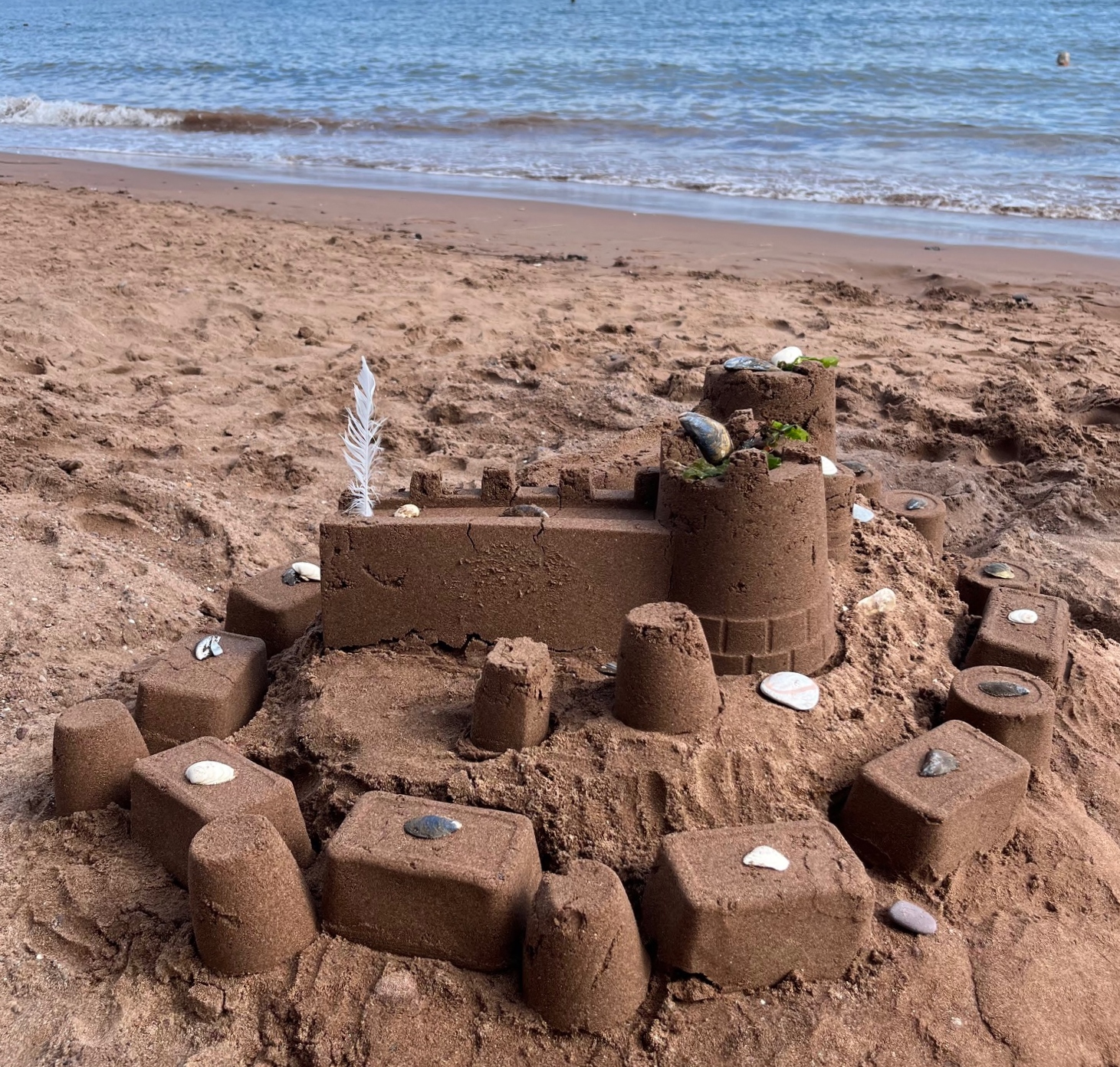
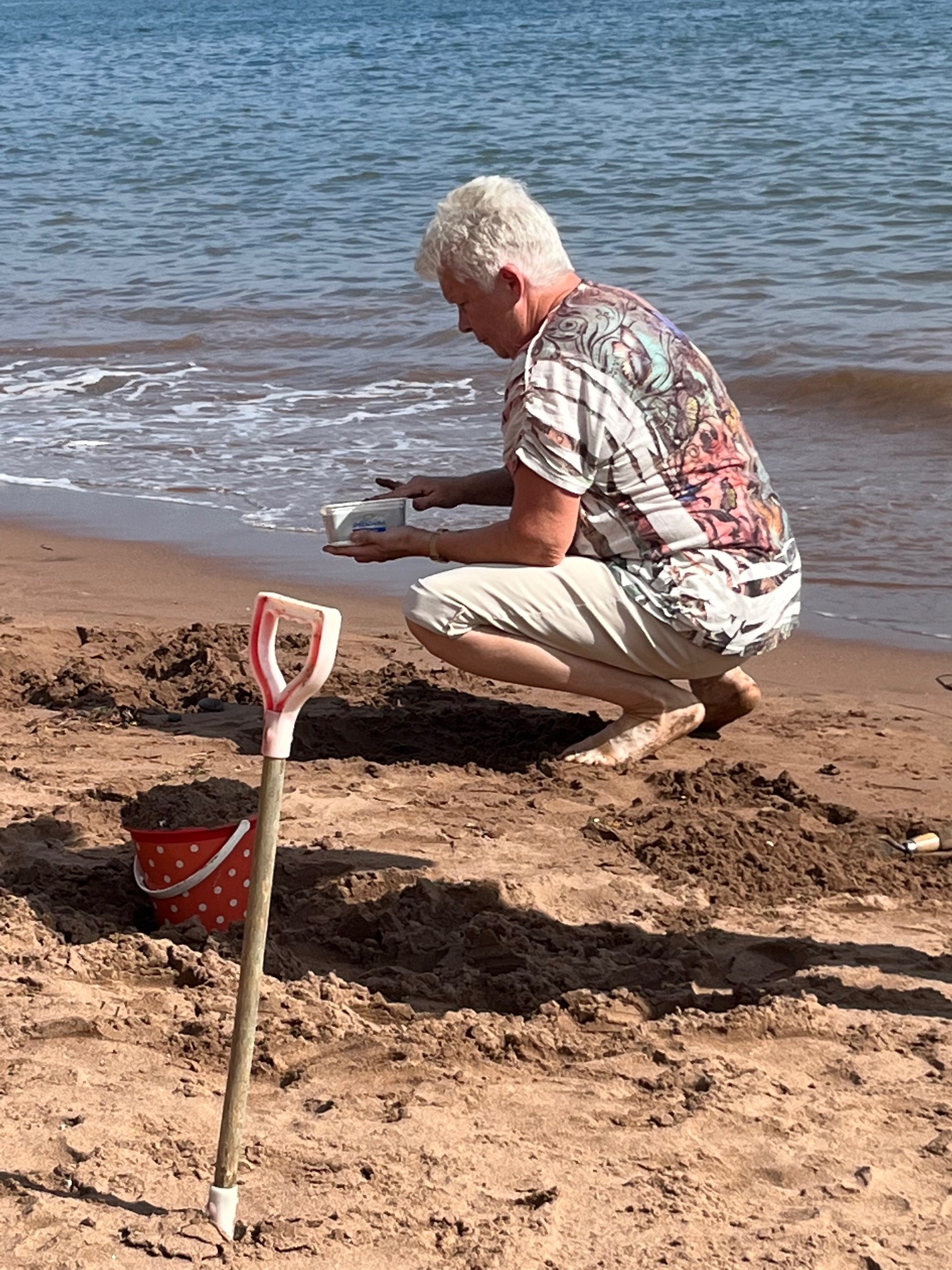
Go to the English seaside with a picnic and people you love. Stop and take too many photos. Say over and over, “Isn’t it lovely, just fabulous!” Smile at every single dog and sigh at all the babies. Take a pail and plastic cups, build a sandcastle then decorate it with shells, beach stones and whimsy. Don’t forget the moat so the sea can pour in and cradle your memories. Bring little pebbles and limpets back to your B&B then pack them so very carefully. Arrive at the airport smelling slightly of seaweed and sand and September sky. Put a picture of the castle on your fridge or phone or both so that the sound of gulls crying to the waves will swirl and loop around your heart each morning.



 Literary wanderings