

His words are the sounds of love. That is what I jotted in my notes about Robert Hughes’ prologue in his book Rome. This is a man smitten. In just these first few pages, he presents a sensory smorgasbord as he describes his first visit to the Eternal City.
The enveloping light
The worn, organic colors of the ancient earth and stone
The very trees were springing, tender green
The vegetables were burgeoning in the markets … their sellers did not want to constrain them
Even the potato … took on a sort of tuberous grandeur in this Mediterranean light
This vegetable glory, this tide of many-colored life
He contrasts all of this life with the often-grisly history of Rome. So much talent and intellect, so much ignorance and intolerance, so much living and dying down through the flowing centuries. Hughes says that “in a sense all of Rome is a museum inside out.” I am so curious to see this city that stunned and seduced a young Australian.
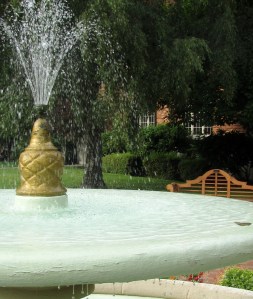
“In Rome … I felt surrounded by speaking water.” What a lovely description of fountains. “It seems they are there to be breathed, not just seen.” I am thrilled to see them before I ever do. Ruskin would be pleased.
 A nearly 2,000-year-old bronze statue of Emperor Marcus Aurelius and his horse sets Hughes way back on his heels. I am set way back in my easy chair, absorbing his description. “This is no rocking horse.” “Marcus Aurelius’ hair stands energetically up, a nimbus of corkscrewing locks.” I can already feel it. I want to see it.
I hope that, as Hughes says, Rome will be my guide backward as well as forward. Even perhaps my muse.
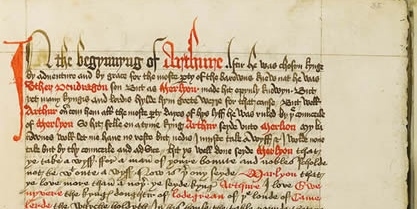
 Never. King Arthur claims Roman lineage and sends a message to Lucius: I’m coming for you. The good king sets off toward Rome, but not before poor Queen Guenivere swoons in sorrow at his parting. Meanwhile Emperor Lucius heads to France, pillaging and conquering along the way. Arthur kills a terrible, horrible, very bad giant of Genoa. Then Arthur does away with Lucius and rides to Rome, mowing down kings and nobles along the way and sending their corpses to the Pope. Surprise, the Pope crowns him emperor of Rome. The marvelous knights get homesick and miss their wives. (No word on whether Arthur misses Guenivere.) The splendid Arthur declares “enough is as good as a feast” and “there was trussing of harness” and they all return to England.

 Makes me think of a quote from
 Lucy did not know her mind and heart were asleep until she ventured out into a different world, where her habits and patterns were disrupted. She went to Italy the first time as a tourist. She goes a second time as a traveler. Someone fully alive, no longer in conflict with her inner self.
 He starts with compliments about her royalty, how much she means to him, and how her memory will never dim during his lifetime. (Hmmm.) He denies planning to sneak away (even as he was, in fact, sneaking). Then he says he was not really and truly married because the rituals were not fulfilled. (He was just a little bit married.) Aeneas invokes the horror of a paternal haunting (who can argue with a ghost?), his family obligations and his destiny to build a new Troy. He points out that Dido herself is a refugee escaped from her wicked brother, and asks her why she would begrudge him the same privilege. (One word: Cheeky!) His ace card: the god Mercury has ordered him to Italy – his new home, his new love. He blurts out to Dido, “I drank his message in! So please, no more of these appeals that set us both afire. I sail for Italy not of my own free will.”


 Fun factoids about London:
 a half thousand years


 Literary wanderings