
I’ve peered over the edge of life at death, wobbling between the known and the unknown.
 In my early 40s a cancer diagnosis dropped out of the sky and knocked me into a year of surgery, chemo and radiation. My heart carried the weight of the surgeon’s words, “I’m so sorry – this is a very bleak prognosis.” I couldn’t see a place for my plans or my hopes.
Still, I kept living. The chemo nurses, the oncologist, the radiologist all told me stories of patients who survived and surprised them. They were brave enough to look me in the eye and believe. My counselor, my friends, family and colleagues surrounded me with encouragement, optimism and grace along with a generous helping of realism. Gradually I let go of the heavy prognosis and reached for Emily Dickinson’s “thing with feathers that perches in the soul.” The little bird of hope warmed my battered spirit and relit my eyes.
 Nearly two decades later, I see every sunrise as a small piece of the future, gifted to me – the surprising survivor.
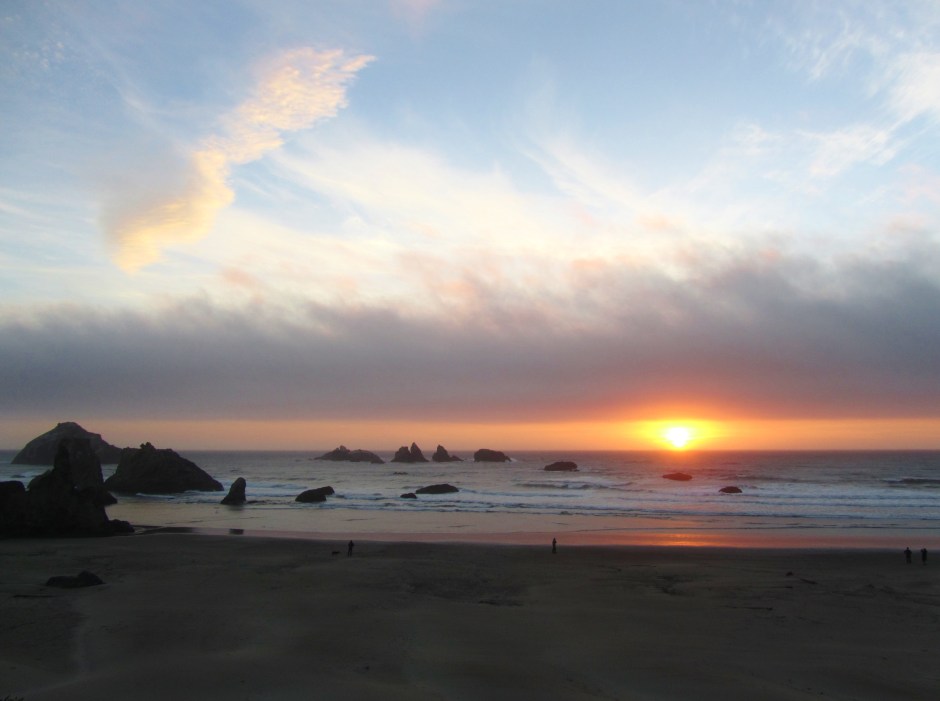
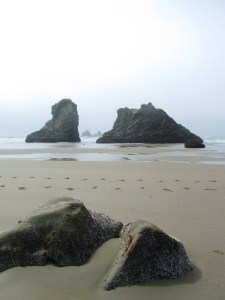
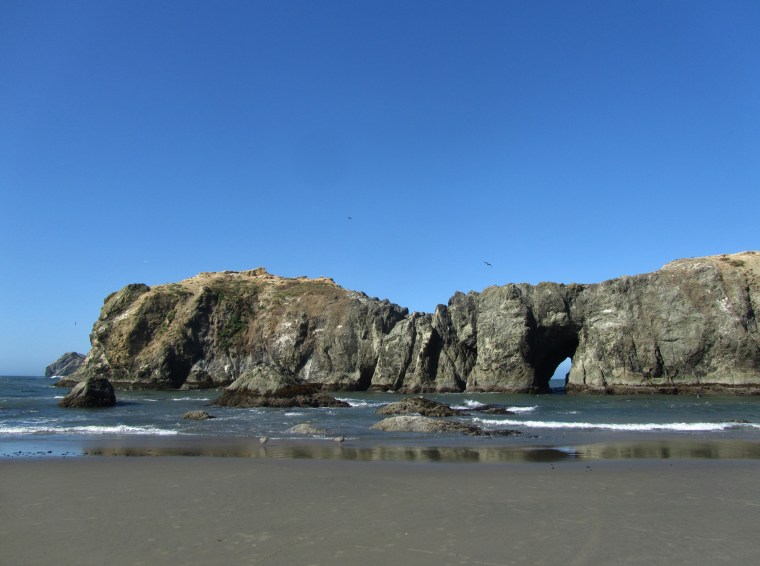
I’m posting photos of the beach because it’s one of my favorite places. It is so alive. The sand is different every day. The wind keeps me guessing. The water is every shade of blue and green, ever swirling back and forth. Gulls plead and bicker and huddle and hunt. Slashes of seaweed arrive with the tide. Fog slinks along abruptly engulfing huge crags of rock in a cascade of grey cotton. No wonder that on my last trip, when I took these photos, I looked out along the shore and saw a lone walker suddenly start clapping and jumping and laughing into the blustering gusts. It was a classic case of beach overdose.
The beach entreats my lungs to breathe deeply and feel her salty spirit. To remember that every day is a new birthing of time. For me, it is a place of restoration, to refresh my little bird. A place to be alive.
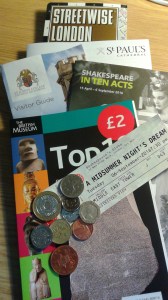 Traveling to London is like visiting an old friend – someone I’ve long wanted to get to know better. Each time I see the grand lady, I discover another aspect of her history and culture. Oh, I see her flaws, such as when her motorists yell at me for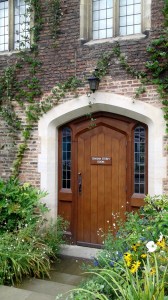


 I’m a rain enthusiast. Not a die-hard, in-your-face fan because there is such a thing as too much rain. More of a devotee of the finer features of rain. It probably comes of growing up in the Pacific Northwest in Vancouver and Victoria, B.C., and then living in both Portland, Ore., and the Seattle area. Most of us here understand the nourishing role of rain and all it does for our outdoor living rooms. Matt Love, an Oregon author, wrote a quirky, meandering little book entitled Of Walking in Rain. Naturally I bought it and splashed along with his writings, mostly based on life along the Oregon coast where the rain is prodigious and ubiquitous. Reading about rain or walking in it are what devotees of rain are apt to do when they are not perusing catalogues of rain-repellant and waterproof clothing and hats while sipping a hot drink.
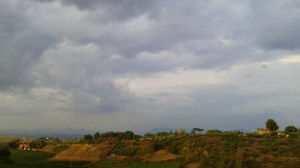 of churches” and “hail clatters on the terrace.” After the onslaught, he notices what I do during my visit. “In the early morning, the air seems shinier and purer than I’ve seen it.” I suppose it’s the drama of rainstorms that appeals to my writer’s heart, bringing the humidity to a climax while the serene aftermath becomes a glowing denouement.
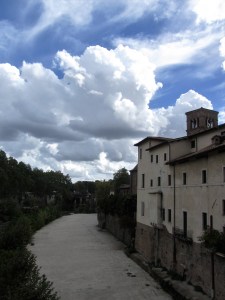
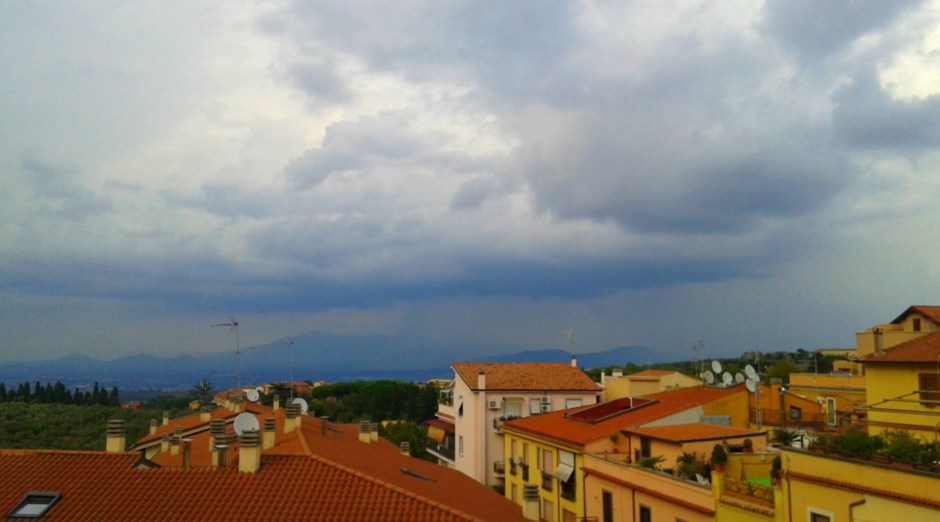
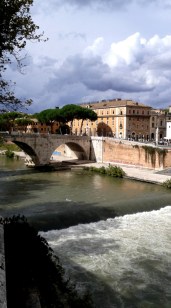 Rome offered me its own stormy rain encounters. Like the city, rain is a full-immersion experience. The rain performance is usually supported by two reliable character actors. The distant voice of thunder rumbling its complaints to the mountains. Lightning stabs the air with flashy whispers, startling the sky wide open. Then, flowing onstage, water descends from cloud to street, thundering along in its own running of the bulls along the cobblestones.
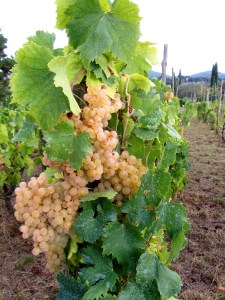
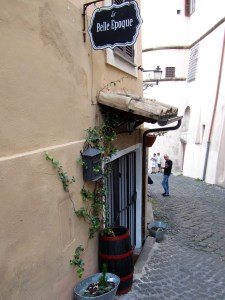 Frascati is a 25 minute train ride from Rome and worth every minute. It is one of several historic towns in the hills outside Rome known as the Castelli Romani. We tour the medieval part of town with Dominique of The Old Frascati Winery, who is a delight. So much history packed into narrow cobblestone streets.
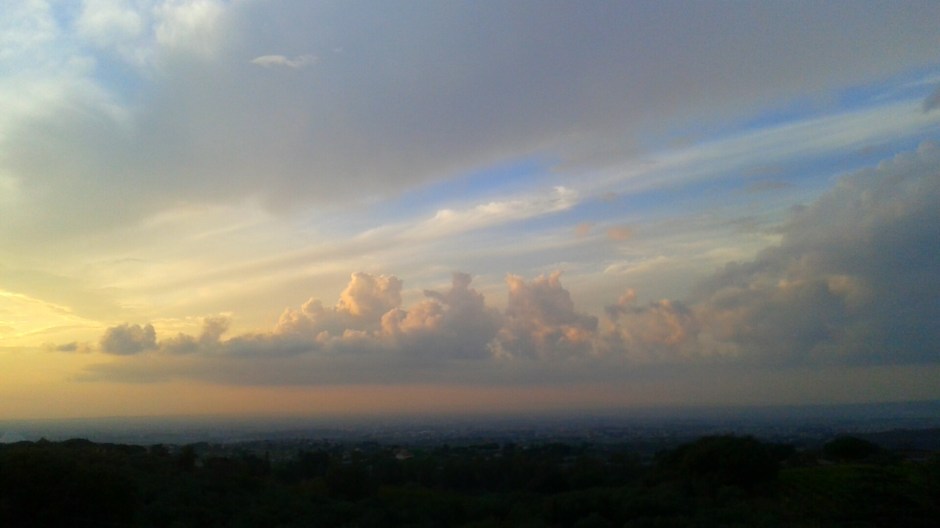
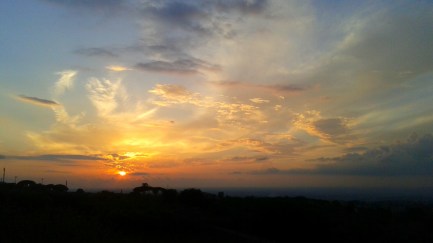
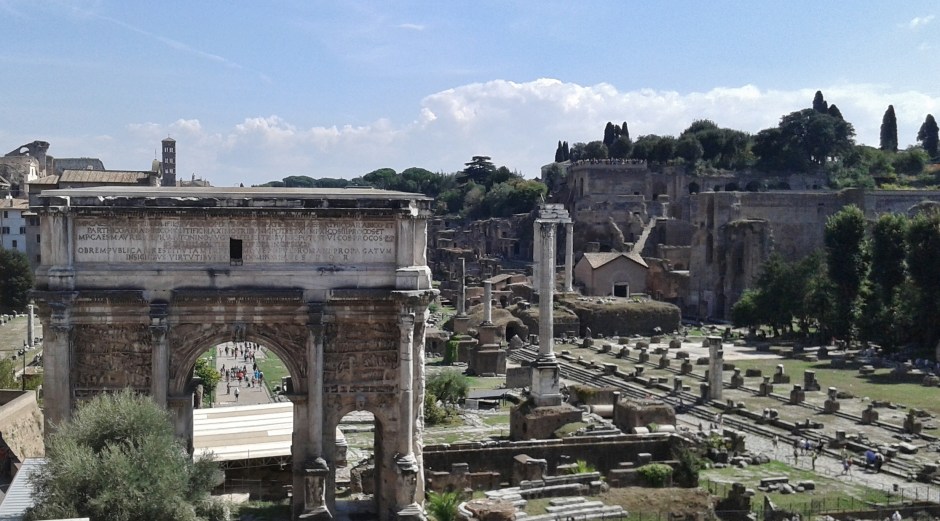
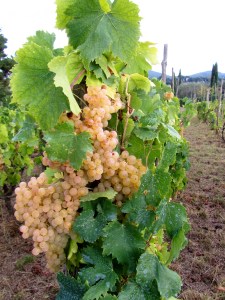 golden hour – and storm clouds are brooding over Rome. I cannot stop taking photos and thinking about Anthony Doerr’s soaring prose about the light in Rome: “It drenches, it crenellates, it textures.”
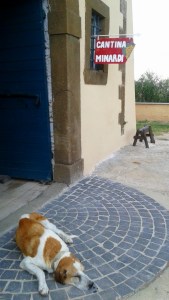 Our taste buds discover Frascati wine and are thrilled. Though I’ve never done it before, I buy two bottles to bring home in my suitcase, plus two bottles of the best olive oil ever. (All four make it home without breakage, much to my relief.)
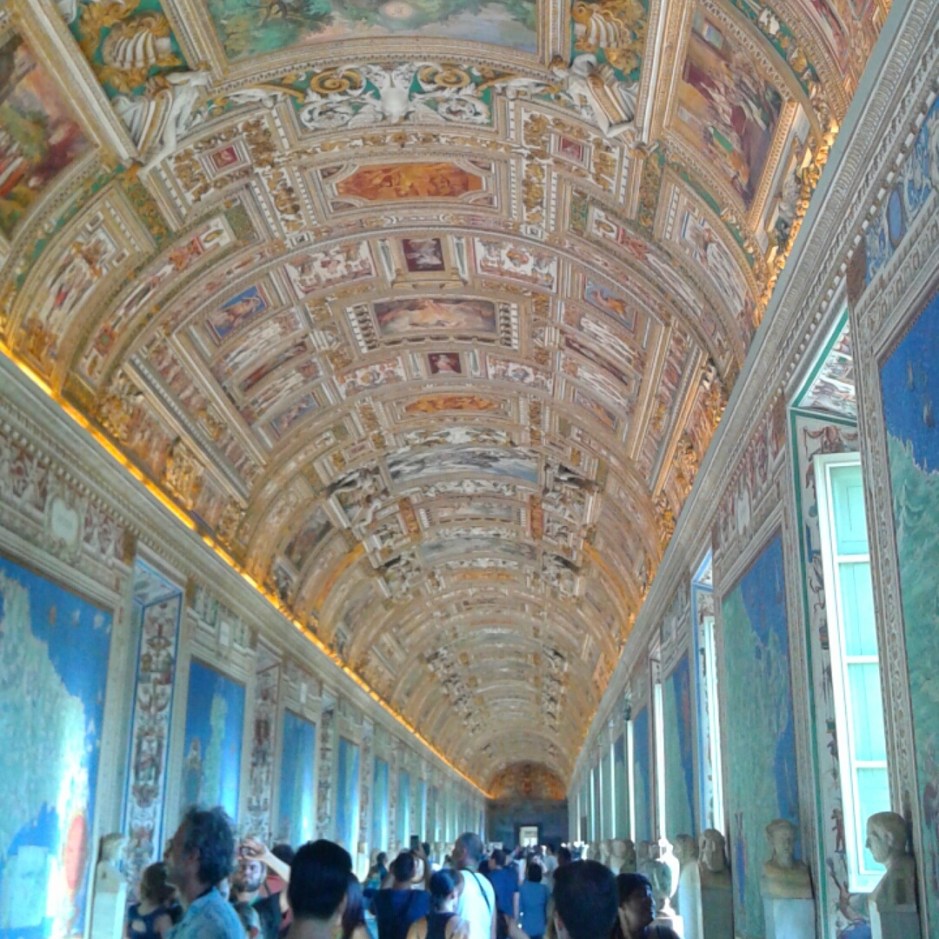
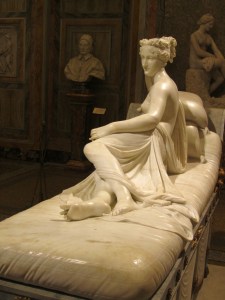
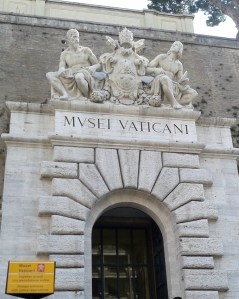 When I think of paintings as works of art in a museum, what comes to mind is something in a frame. However, I expanded my horizons on this point when in Rome. Many fabulous works of art live on walls. Through the ages in Italy, fresco was the chosen medium for many wall murals, including the Gallery of Maps in the Vatican. Of all the stunning art in the Vatican, this was my favorite. As I walked, in the guards opened all the windows through the hall allowing golden afternoon sunlight to spill in and mix with the blues and greens of the maps. I felt as though I was in an ocean of color.



 Alida Slade emanates energy and misplaced ambition while Grace Ansley is quieter and more traditional. Or is she? Alida seems to encircle Grace with her interior thoughts and judges her inferior. That’s the trouble with ego-driven thinking – it blinds the egoist to truth. Together yet orbits apart, the two women sit with the shadows of their past and the ruins of their dreams. It is not until the conclusion that I understand who is more at peace with her choices.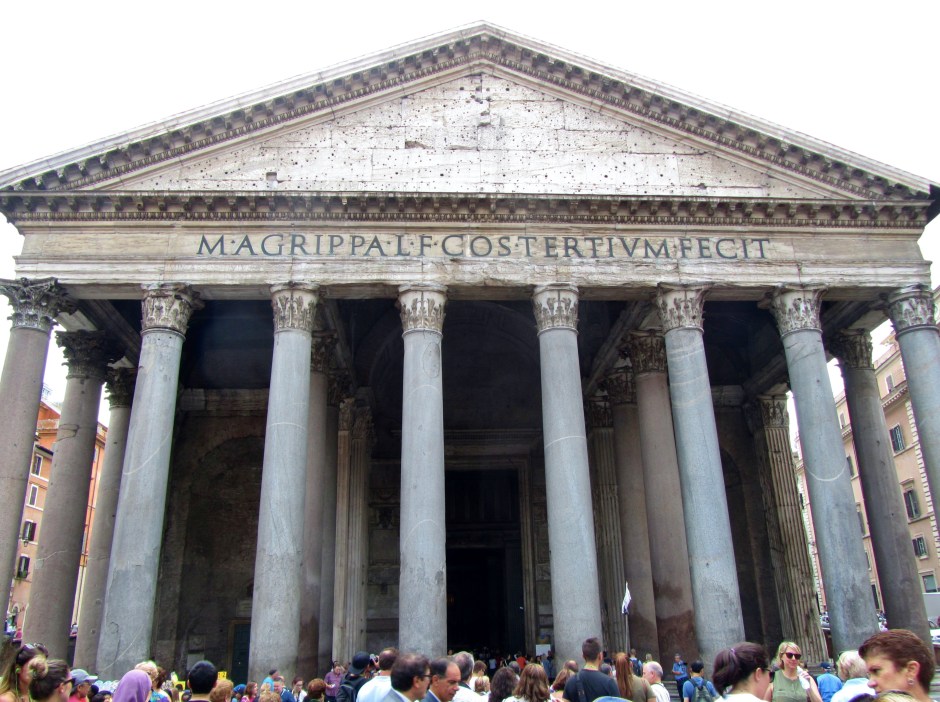
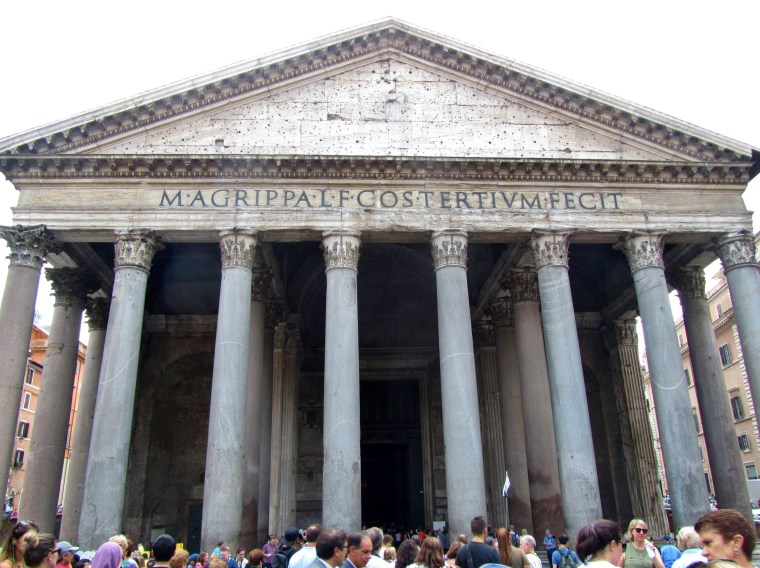
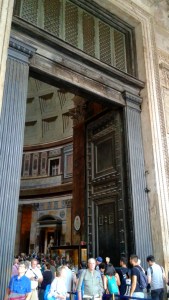 “When you see the Pantheon for the first time, your mind caves in. You walk through the gigantic doorway and your attention is sucked upward to a circle of sky. A filtering haze floats inside; a column of light strikes through the oculus and leans against the floor. The space is both intimate and explosive: your humanity is not diminished in the least, and yet simultaneously the Pantheon forces you to pay attention to the fact that the world includes things far greater than yourself.” Anthony Doerr, Four Seasons in Rome
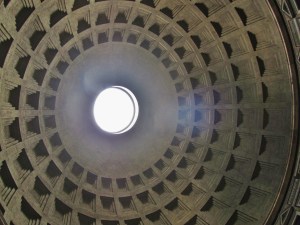
 at 60 tons each. The inside columns are more than 32 feet tall and each has a heft of 25 tons. You get the idea: it is HUGE.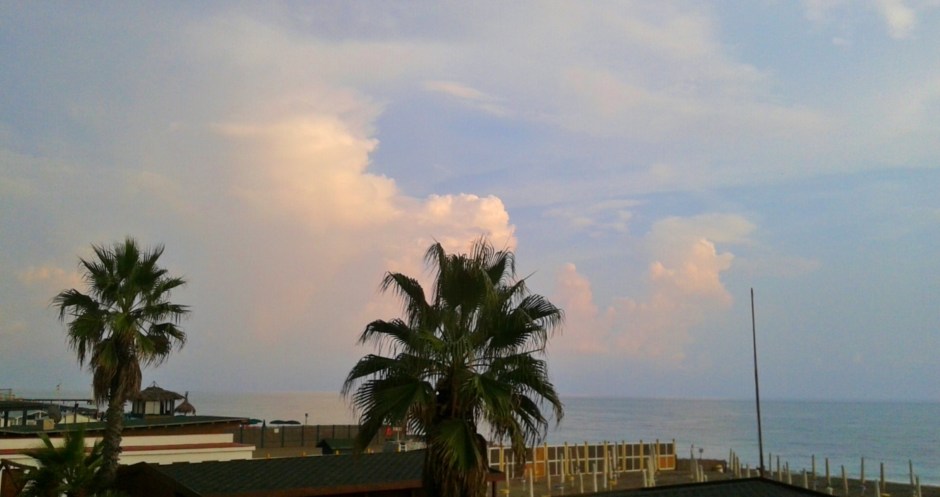
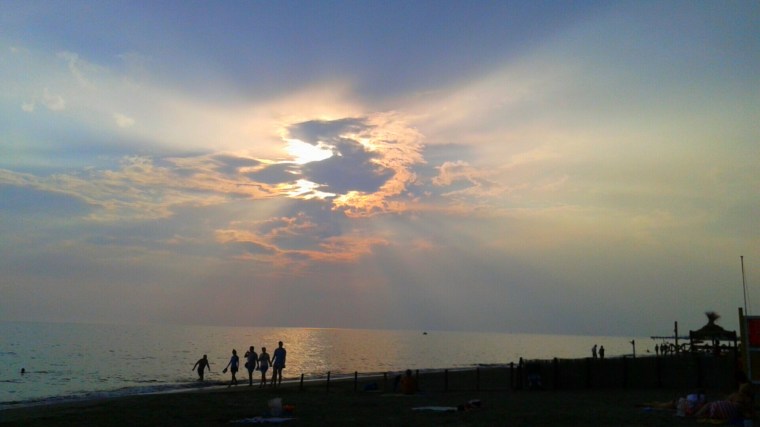
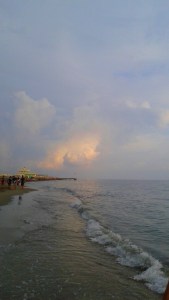 After we explored Ostia Antica, the forgotten city, we hopped back on the train and went a couple more stops to the modern Ostia, a seaside suburb of Rome. We wanted to stick our swollen, suffering feet in the Tyrrhenian Sea and eat wonderful Italian food. A few blocks from the train – with a quick stop for gelato, of course – it was a little weird to see the entire seafront fenced off and divided into sections, each portion controlled by a bar, a restaurant, or some other business that regulated access to the ocean. We found a bar, bought some drinks and wandered down through the cigarette-butt-infested sand to the water. (Did I mention that people smoke outside in Rome – everywhere – and toss their butts all over the ground? They do.)
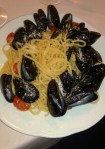 sea, all was well. Later, we feasted on pasta and seafood supplemented by sparkling water or wine as we felt inclined, and laughed our way through the evening.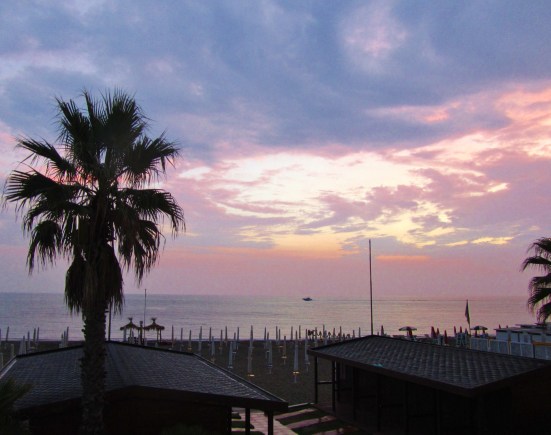
 Literary wanderings