
I have a complicated relationship with international plumbing. Being an optimist who lives in the U.S., I expect it to be predictable and reliable. When traveling, I am often deeply disillusioned.
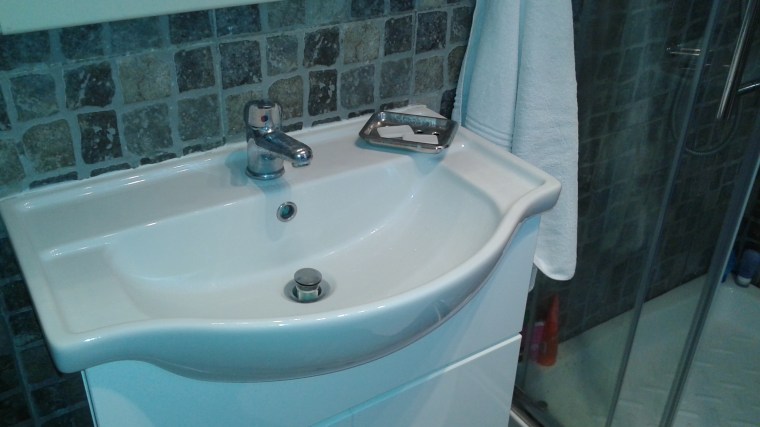
Before arriving in Rome, my study abroad group spent a week in England. I did not anticipate or receive frills at our London student-oriented accommodations. However, the basics, I hoped, would include functioning plumbing. In this I was to be disappointed. (Here I must point out that one can be in far more upscale British lodgings and have unhappy plumbing experiences.)
The first shower stall I tried had a large button for the water. Being a practical optimist, I press the button before entering the stall and twiddle with the temperature control until comfortable. I hop in and suds up, only to find that the water is on a timer and stops after a couple of minutes. No problem. I hit the button again. Aaaagh! The restart blast is ice cold. The stall being a very economical size, I take it on the chin whilst the water slowly warms. Next day, I select another stall without a timer button. Progress! The water offers a bracing blast. I hop in, suds up, and realize the water is getting hotter and hotter. More twiddling with the temperature control gets it to a bearable point, but I exit feeling like a boiled fish. Never mind, I tell myself, things will get better.
In Rome, we stay in rental apartments. The bathroom is definitely a few steps up. Time
for a shower. On goes the water – I’ll be generous and call it a gentle stream. Temp is OK but the removable shower head is hanging precariously on its holder and any touch causes the flow to redirect unpredictably. Under the trickle, I suds up. Pffft … the water reverses course and splutters out of the back of the shower head while shampoo is dripping into my eyes. As I turn to investigate, bam, down falls the shower head, never to hang above my head again that morning. It hits my noggin on the way down and I nearly fall.
Happily, I do not end up wedged in the bottom of the nicely tiled but frugally sized shower, naked and unlovely as a 60-something jaybird, trying to communicate with Italian paramedics. A new shower head is later installed that points directly at the wall, and all is well.
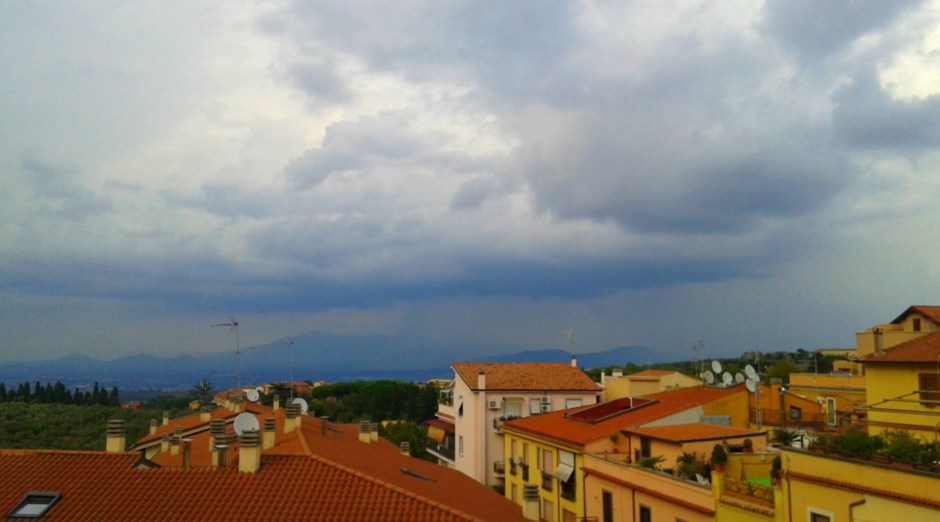
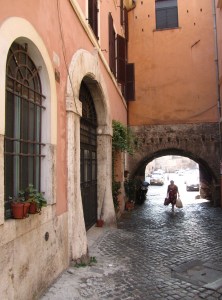
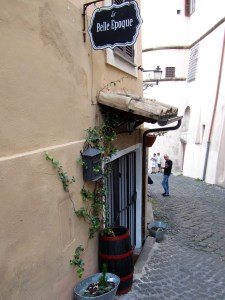 Frascati is a 25 minute train ride from Rome and worth every minute. It is one of several historic towns in the hills outside Rome known as the Castelli Romani. We tour the medieval part of town with Dominique of The Old Frascati Winery, who is a delight. So much history packed into narrow cobblestone streets.
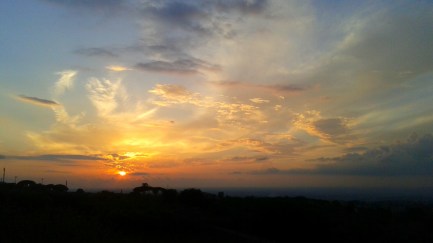
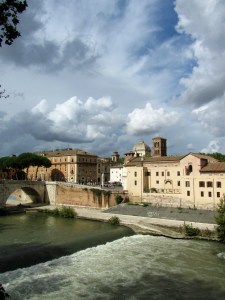
 golden hour – and storm clouds are brooding over Rome. I cannot stop taking photos and thinking about Anthony Doerr’s soaring prose about the light in Rome: “It drenches, it crenellates, it textures.”
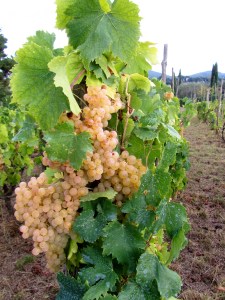
 Our taste buds discover Frascati wine and are thrilled. Though I’ve never done it before, I buy two bottles to bring home in my suitcase, plus two bottles of the best olive oil ever. (All four make it home without breakage, much to my relief.)
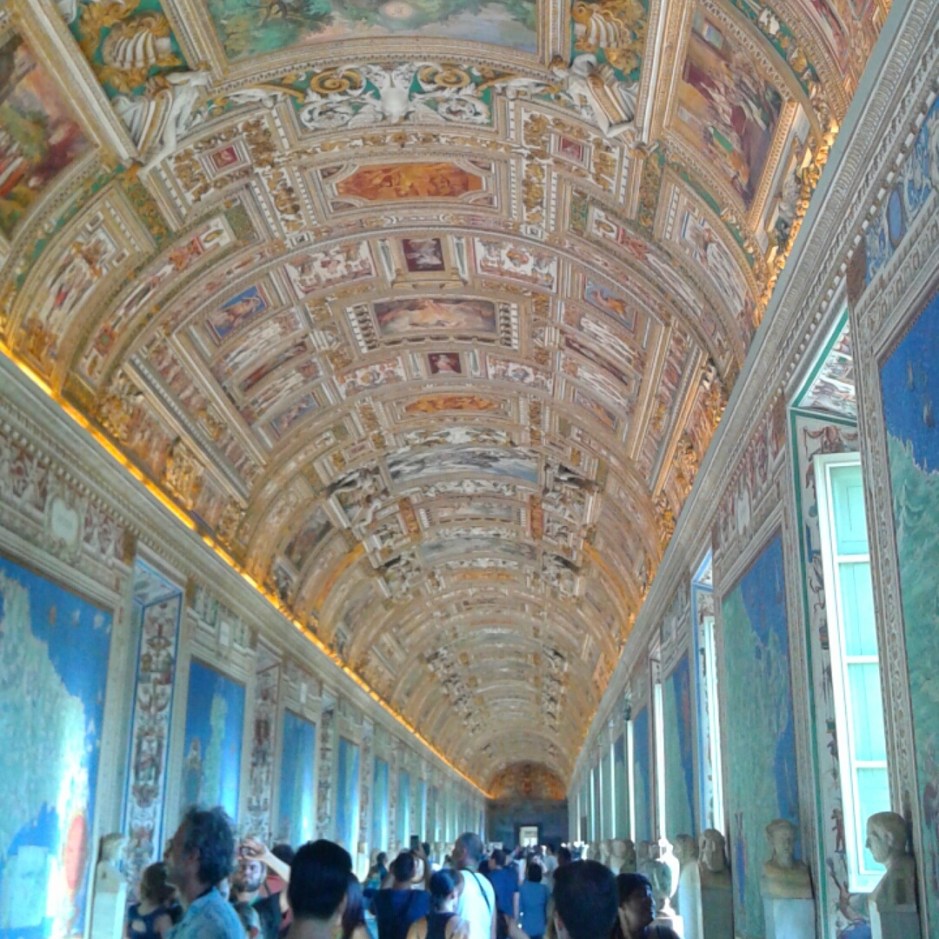
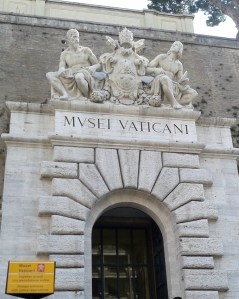 When I think of paintings as works of art in a museum, what comes to mind is something in a frame. However, I expanded my horizons on this point when in Rome. Many fabulous works of art live on walls. Through the ages in Italy, fresco was the chosen medium for many wall murals, including the Gallery of Maps in the Vatican. Of all the stunning art in the Vatican, this was my favorite. As I walked, in the guards opened all the windows through the hall allowing golden afternoon sunlight to spill in and mix with the blues and greens of the maps. I felt as though I was in an ocean of color.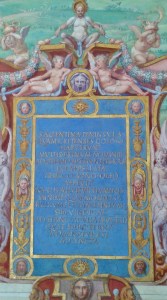



 Alida Slade emanates energy and misplaced ambition while Grace Ansley is quieter and more traditional. Or is she? Alida seems to encircle Grace with her interior thoughts and judges her inferior. That’s the trouble with ego-driven thinking – it blinds the egoist to truth. Together yet orbits apart, the two women sit with the shadows of their past and the ruins of their dreams. It is not until the conclusion that I understand who is more at peace with her choices.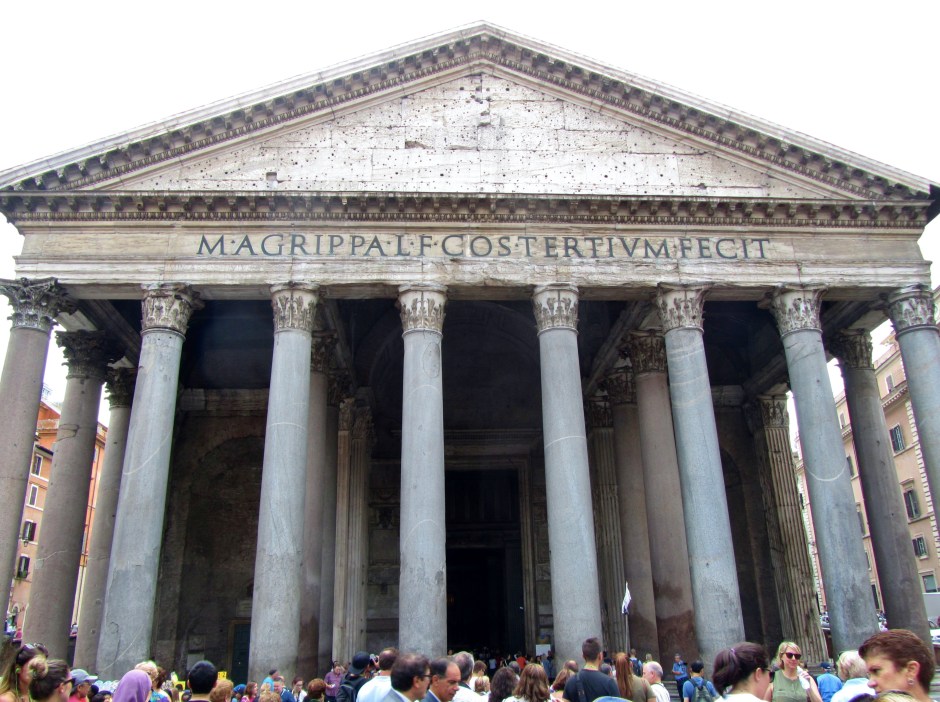
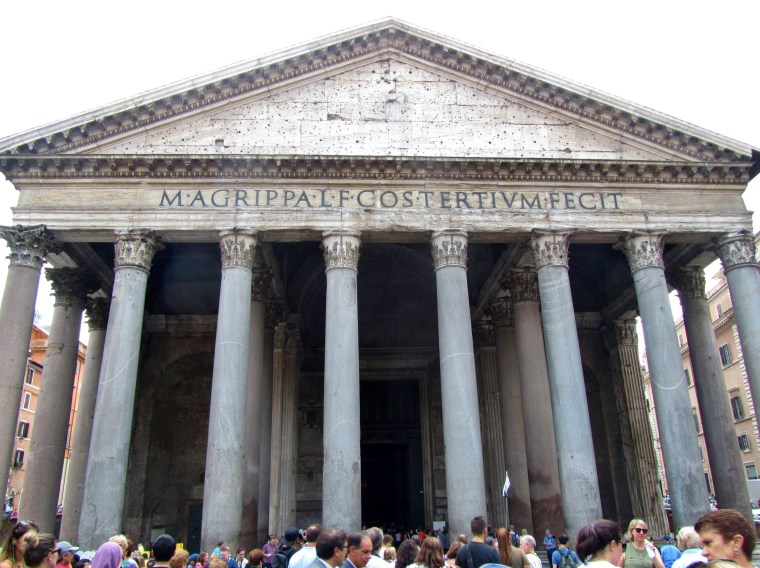
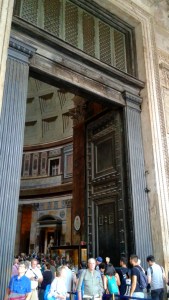 “When you see the Pantheon for the first time, your mind caves in. You walk through the gigantic doorway and your attention is sucked upward to a circle of sky. A filtering haze floats inside; a column of light strikes through the oculus and leans against the floor. The space is both intimate and explosive: your humanity is not diminished in the least, and yet simultaneously the Pantheon forces you to pay attention to the fact that the world includes things far greater than yourself.” Anthony Doerr, Four Seasons in Rome
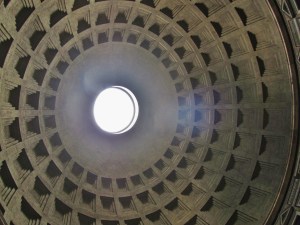
 at 60 tons each. The inside columns are more than 32 feet tall and each has a heft of 25 tons. You get the idea: it is HUGE.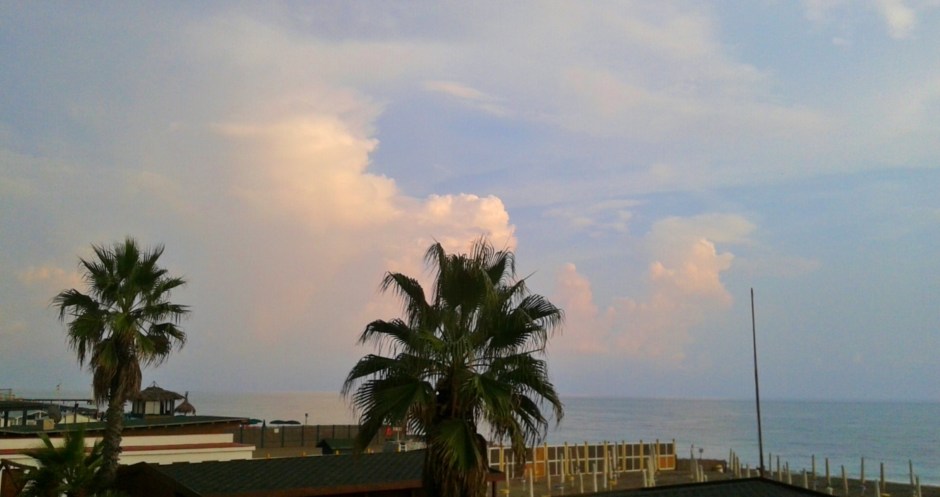
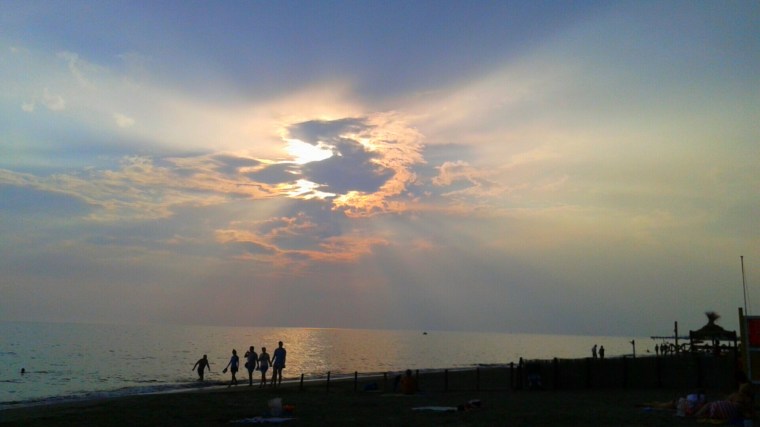
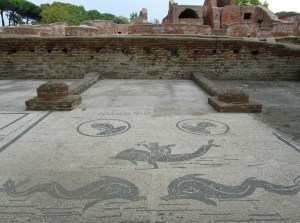
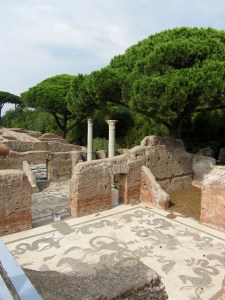
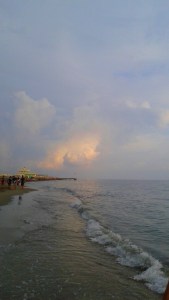 After we explored Ostia Antica, the forgotten city, we hopped back on the train and went a couple more stops to the modern Ostia, a seaside suburb of Rome. We wanted to stick our swollen, suffering feet in the Tyrrhenian Sea and eat wonderful Italian food. A few blocks from the train – with a quick stop for gelato, of course – it was a little weird to see the entire seafront fenced off and divided into sections, each portion controlled by a bar, a restaurant, or some other business that regulated access to the ocean. We found a bar, bought some drinks and wandered down through the cigarette-butt-infested sand to the water. (Did I mention that people smoke outside in Rome – everywhere – and toss their butts all over the ground? They do.)
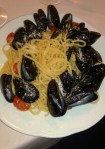 sea, all was well. Later, we feasted on pasta and seafood supplemented by sparkling water or wine as we felt inclined, and laughed our way through the evening.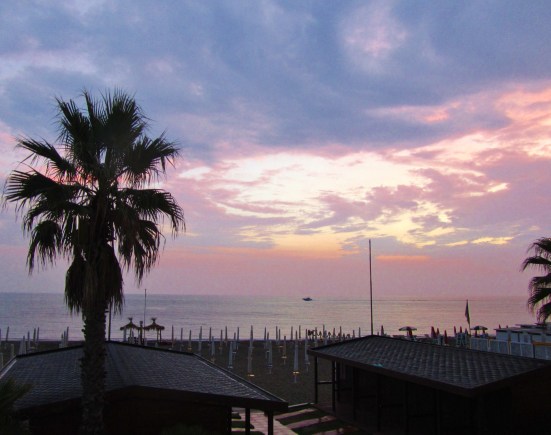
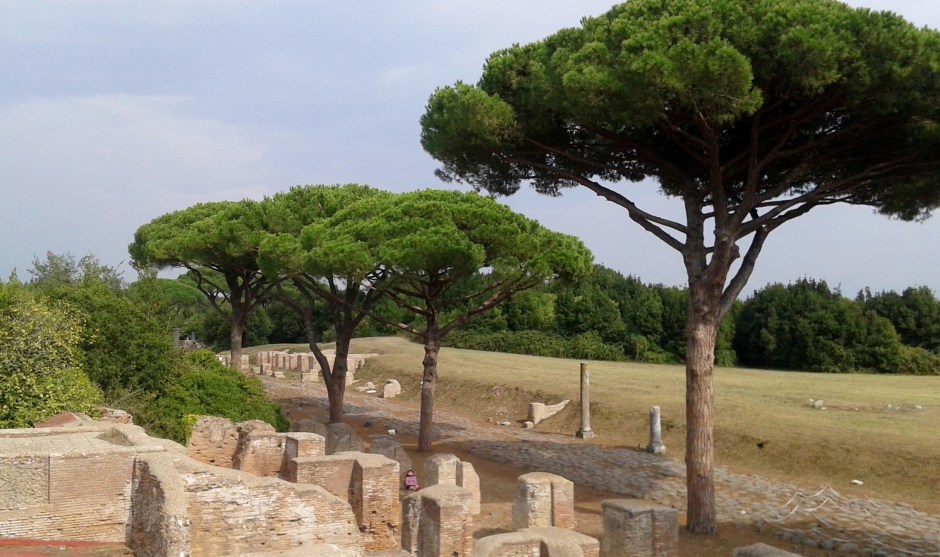
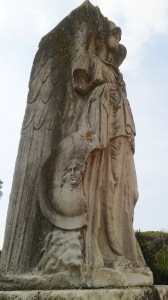
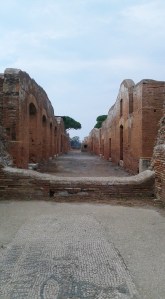 In 1870 the city became part of the new Italian state, and scientific excavations began in the early 1900s and have continued so that now visitors can see much of the city, but apparently there is still more to discover.
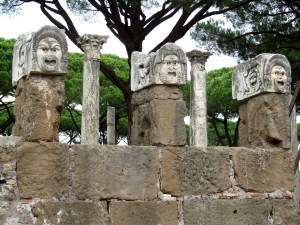
 of the partially restored amphitheater’s stage, costumes hung for a live performance that night were left without watchers, a stark contrast to Rome, where we were told be constantly on guard against theft.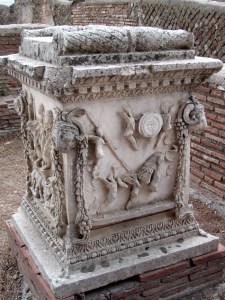
 Literary wanderings