

Rome holds a particular fascination for me because I’ve never been there. I haven’t stepped down its historic streets or heard its people or seen its antiquities jumbled together with modernity.
It seems, from reading Robert Hughes and Anthony Doerr, that this is a city that wants a relationship. Something personal. They both write of the light and the color and the smell of Rome. I am ready to build something with an old city that is new to me.
When Hughes first arrived his senses went into glorious overdrive. “The enveloping light can  be of an incomparable clarity, throwing into gentle vividness every detail presented to the eye. First, the color, which was not like the color of other cities I had been in. Not concrete color, not cold glass color, not the color of overburned brick or harshly pigmented paint. Rather, the worn organic colors of the ancient earth and stone of which the city is composed.” He writes of the color of the ages.
Doerr falls in love with the sky. “I never tire of the clouds here, the light bleeding through their shoulders.”
On the terrace one night he watches as “the sky passes through a sequence of darkening blues.” “Is this Rome? Or a dream?” He is afraid of waking bereft of the color and air of Rome.
Early morning after a storm, “the air seems shinier and purer than I’ve seen it. Dawn stretches across the gardens … the old walls look washed, almost new; a thousand speckled tints of bronze, trailing lacework of ivy, glossy tangles of capers.”
As he prepares to take his family home to Idaho, he says goodbye to “the amber and purple and green of the distances, the blues of dusk…” Then he wonders if enough Roman light “enters our eyes … maybe we incorporate it. Maybe it becomes part of us. Maybe it flashes around inside us, endlessly reflecting, saturating everything.”

 “trees both unruly and composed at once, like princes who sleep stock-still but dream swarming dreams.” He never expected them or for Rome “a city of 3 million people to be a living garden, moss in the sidewalk cracks, streamers of ivy sashaying in archways, ancient walls wearing a haze of capers, thyme sprouting from church steeples.”
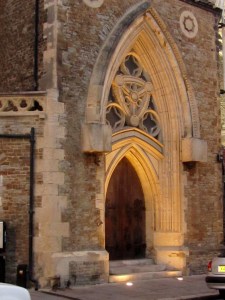
 Constantine funded the construction of “the mother and head of all churches of the city and of the world,” known as
  like most all of his predecessor emperors, Constantine was no saint. Nope. Hughes rightly describes some of his edicts as “psychotic” – edicts that pretty much put girls and women under the thumb of men, for better or worse. While he decreed that rapists were to be burned alive, the female victims lost the right to inherit property from their parents, essentially marginalizing them in society. Why? Because it must have been their fault. Of the other punishments – read at your own peril.
 Should you ever pick up this superbly written book, far better that you go back a few pages and wander with wonder over his account of the truly remarkable Roman road system. Or bounce forward and read about the architectural innovations made possible by Roman concrete, such as the Pantheon (I can hardly wait to see it), the aqueducts and the thermae, or baths (yep, going to see those too). All of these structures sport the uniquely Roman “giant vaults” made possible by “the poured concrete arch.”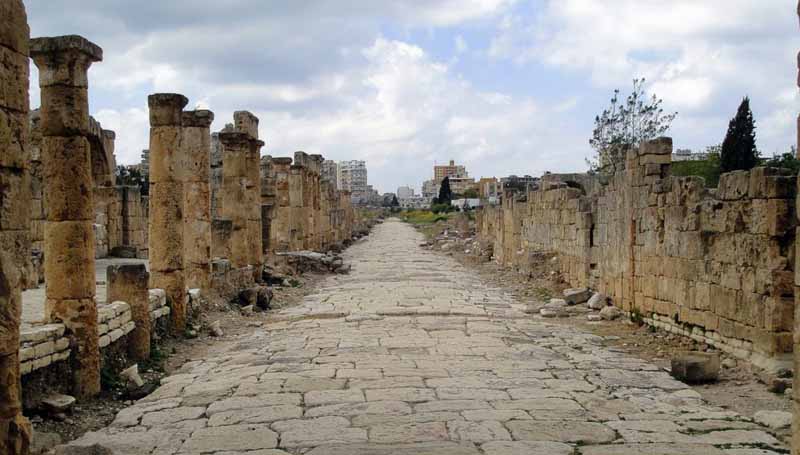
 People threw pretty much everything they didn’t want into the street. Garbage, excrement, kitchen waste, even corpses. (!) There was no running water for most residents, except underneath the ubitquitous public toilets. With stellar sewers and storm water channels, the rain would eventually wash the festering, mouldering mess into that system. It all landed in the Tiber River – a source of drinking water. (!)
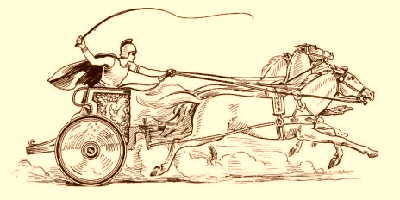 mid-afternoon. (But not the vestal virgins and champion charioteers.) Result: chaos, clutter and cacophony all night long as commercial traffic banged through the stony, rutted streets on “wooden wheels with iron tires.” Poets wrote furious prose about the din.
 I was not expecting to encounter consecrated cluckers when reading a book about the ancient and very fearsome Roman army. It seems that the Romans adopted divination as a belief from the even more ancient Etruscans, who wanted a religious reason to do just about anything. Ever the practical empire, Romans also adapted a host of gods that very much resembled Greek gods, but with different names.


 A nearly 2,000-year-old bronze statue of Emperor Marcus Aurelius and his horse sets Hughes way back on his heels. I am set way back in my easy chair, absorbing his description. “This is no rocking horse.” “Marcus Aurelius’ hair stands energetically up, a nimbus of corkscrewing locks.” I can already feel it. I want to see it.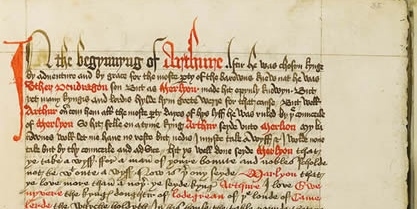
 Never. King Arthur claims Roman lineage and sends a message to Lucius: I’m coming for you. The good king sets off toward Rome, but not before poor Queen Guenivere swoons in sorrow at his parting. Meanwhile Emperor Lucius heads to France, pillaging and conquering along the way. Arthur kills a terrible, horrible, very bad giant of Genoa. Then Arthur does away with Lucius and rides to Rome, mowing down kings and nobles along the way and sending their corpses to the Pope. Surprise, the Pope crowns him emperor of Rome. The marvelous knights get homesick and miss their wives. (No word on whether Arthur misses Guenivere.) The splendid Arthur declares “enough is as good as a feast” and “there was trussing of harness” and they all return to England.

 Makes me think of a quote from
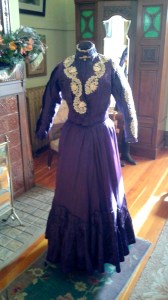
 Lucy did not know her mind and heart were asleep until she ventured out into a different world, where her habits and patterns were disrupted. She went to Italy the first time as a tourist. She goes a second time as a traveler. Someone fully alive, no longer in conflict with her inner self.
 Literary wanderings
