
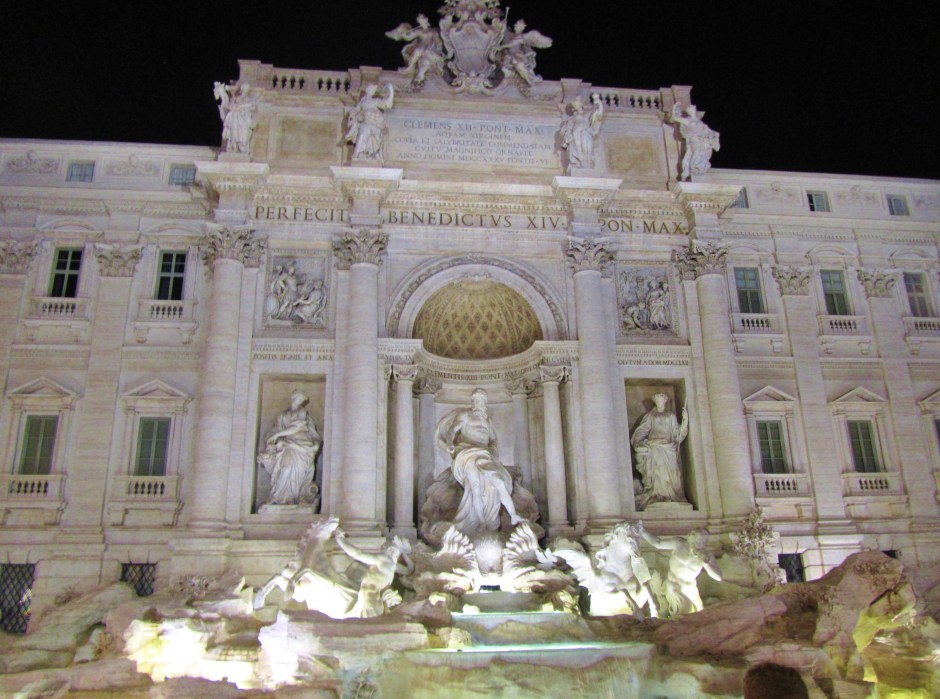
Gian Lorenzo Bernini made sculptures that are simply astonishing. I look at his work and marvel that he lived more than 300 years ago, from 1598 to 1680.
The two most awesome fountains I experienced in Rome were designed by him: The Four Rivers Fountain and the Trevi Fountain. Oceanus absolutely bursts out of Trevi’s stone and I wish I had been able to return to make a better photo of the full magnificence of his figure, the horses and other figures. Bernini designed but did not build his glorious fountain; however, his style pours out of it. (Pictured above.)
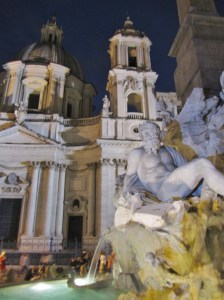
My shots of Four Rivers also do not do that fountain justice. We visited at night, which is how they should first be seen – it is an almost mystical experience to see them emerge from the dark, glowing like planets. Four Rivers stands in front of a tremendous building, Church of Sant’Agnese in Agone, or the Church of the Agony in Piazza Navona. Visitors could spend an entire day in just this one piazza to fully experience the fountains and the church.
Two of my three favorite sculptures in the Borghese Gallery (itself a work of art) were Bernini creations: David and Apollo and Daphne. Another smaller figure – a rider and horse – was so full of his touch that I include a photo
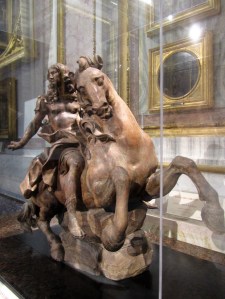
here, even though it is distorted from the glass cover. I loved David – so full of energy and purpose – and am convinced that he looks like someone trying to fell a giant. I did not care for the theme of Apollo and Daphne, as she only escapes being raped by turning into a tree, but was completely gobsmacked by the figures.
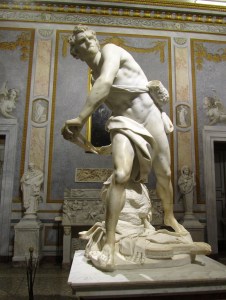
Bernini worked against the nature of stone and made it alive, made it speak, pulled the story out so it became breathtaking.
What would it be like to have all of that beauty inside one heart and mind? To have Oceanus awaiting release, swirling and calling through the stone. To have David’s feet thudding, his sling whistling, and perhaps hearing
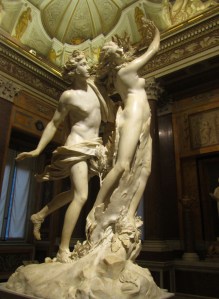
involuntary grunts as muscles strained for the throw, reaching out of the marble.
History suggests he was a little bit crazy. Perhaps a lot. But he made some of the most beautiful art I’ve ever seen.
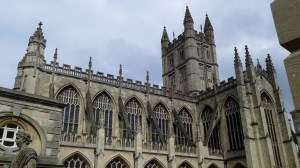 In the old section of town, Bath Abbey stands in glorious aged stone. It was the victim of King Henry VIII’s pillaging and destruction, and lay in ruins until the early 1600s when it was repaired and has been in use since. It was not open for tours, so is on my list for the next visit!
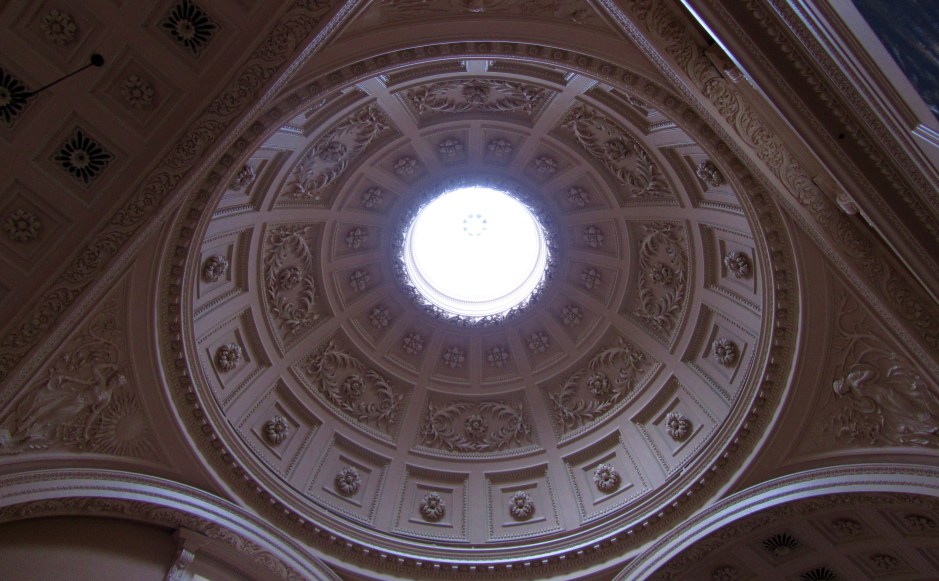
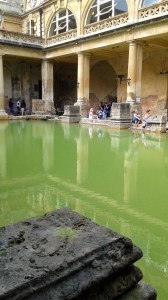 antiquity, engineering and level of preservation. We entered through an 18th century building with its own stunning domed ceiling that imitates the Pantheon’s dome and oculus. The Great Bath and other smaller baths are below street level and are filled with thermal spring water glowing a distinctive green. The water rises each day at the rate of 1,170,000 liters at a steady temperature of 46 degrees C (114 F).
 into an actor portraying a Roman vendor who offered to sell me one denarius (Roman coin) for the price of 2 denarius. He then offered me a curse tablet for 4 denarius. After I explained I was more inclined toward blessings, he offered to create one of those for 8 denarius, as blessings are far more work.
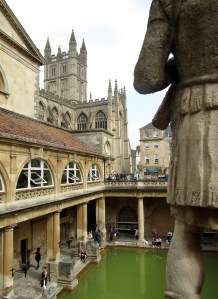 went with two traveling friends for afternoon tea (a three-tiered tray of goodies) in the Pump Room and did my best to eat it all!
 stops to stare and speculate – merchants, customers, the poor and the desperate. Even a wife trying to save her suicidal husband is distracted by the car, which offers no help, no answers. Just more questions.
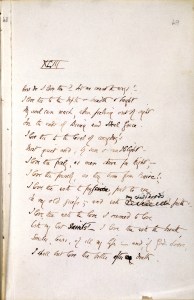
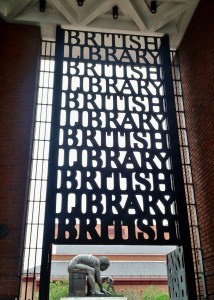 1550 to his nephew with advice on choosing a wife. The basic message was to be realistic and avoid being too picky because he was unremarkable in appearance. Readers could infer the august uncle might also have judged his poor nephew as ordinary across the board. To be a fly on the wall when that letter arrived!
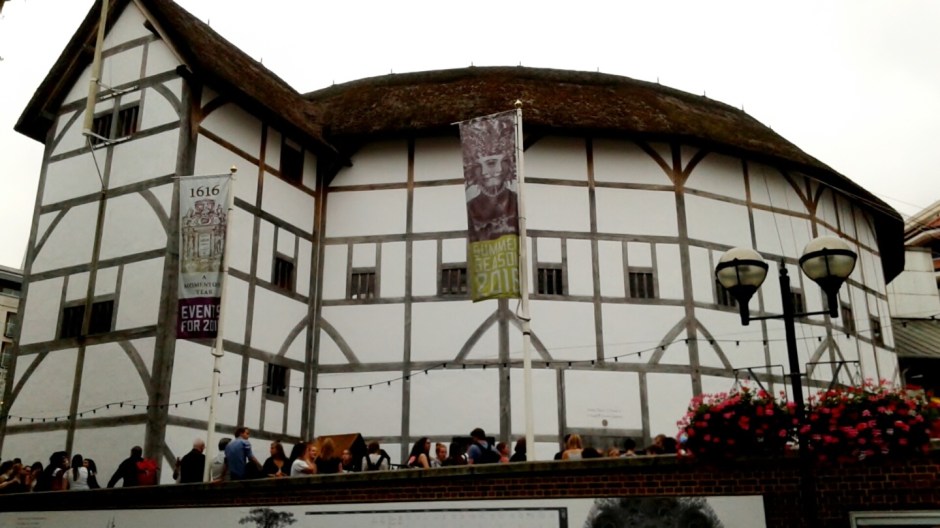
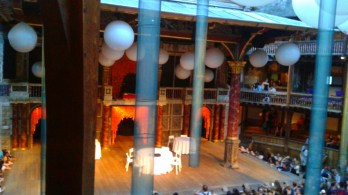 It’s a mischievous play about runaway lovers, featuring a fed-up, then bespelled and beguiled fairy queen, a scheming fairy king and a wild and wily Puck, self-proclaimed “merry wanderer of the night.” They interfere with the human realm and love goes awry every which way! Adding to the mayhem is a play within the main play where inept actors pop up and practice their lines with dubious results.
 upon a tiny, elderly couple dressed in their Sunday best who were moving even more slowly. The Mrs. was a bit more agile and so was leading the way. The Mr. was directly in front of me, turned sideways, hanging onto the handrail and moving methodically down one step at a time. Plunk, plunk, plunk. Around and down we plodded. Fortunately, there was room beside our little knot of slowpokes for others to stream by. (I shudder to think about the pent-up pressure should we have blocked passage.) There was a bit of muttering between the dapper couple, mostly from the Mrs., and I gathered the station was not familiar to them. Then, as clear as a bell, I heard her dry British voice, “If we go down much farther, we’ll see Satan.”

 be of an incomparable clarity, throwing into gentle vividness every detail presented to the eye. First, the color, which was not like the color of other cities I had been in. Not concrete color, not cold glass color, not the color of overburned brick or harshly pigmented paint. Rather, the worn organic colors of the ancient earth and stone of which the city is composed.” He writes of the color of the ages.
 Literary wanderings